


Many people and media companies ask and write about Terry Smith being the inspiration for Ted Lasso.
There are hundreds of facts which show that the Ted Lasso character and the Ted Lasso television series are based upon Terry Smith, and are based on Smith’s personality and the actions that Smith did in 1999-2001 when he was a famous American football National championship and European championship-winning player and head coach in Great Britain, when he became the first American in history to become the owner of a professional English soccer team, and when he became the first American in history to be the head coach/manager of a professional English soccer team.
This Terry Smith storyline is the exact storyline for Ted Lasso and for the Ted Lasso series.
Terry Smith, an American, is a former NFL player who coached football for more than 20 years, including being the player/head coach of professional American football teams in Great Britain, and including being the Great Britain National Team Head Coach, where Smith was the most famous player and head coach in Great Britain for the sport of American football during the 1980’s and 1990’s.
In Great Britain, Smith took over two last place American football teams in 1988 and 1989, and beginning in his first year with each, coached his teams to win five American football National Championships in Great Britain and European Championships for Great Britain.
Smith went on to be elected to The Great Britain Football Hall of Fame, was elected to The International Football Hall of Fame, and was nominated to the Queen of England, Queen Elizabeth II, for end of year honors.
Following his championship-winning American football playing and coaching career in Great Britain, in 1999 he became the first American in history to purchase a professional English soccer club, he was the first American in history to ever be the head coach/manager of a professional English soccer club, and he is the first American to ever coach in the FA Cup, which is the biggest and most famous soccer competition in the world.
This storyline is the exact same storyline as Ted Lasso, who according to the Ted Lasso television series, took over “a garbage team” and coached them to a College Division II National Championship in his first year, before becoming the first American to coach a professional English soccer team.
In the early years of the Ted Lasso show, it was common knowledge that the Ted Lasso character and the Ted Lasso show were based upon and inspired by Terry Smith.
In fact, it was such common knowledge that there are hundreds of articles written online from those years that write about Terry Smith as the inspiration for the Ted Lasso character, and write that the Ted Lasso show was based upon Terry Smith.
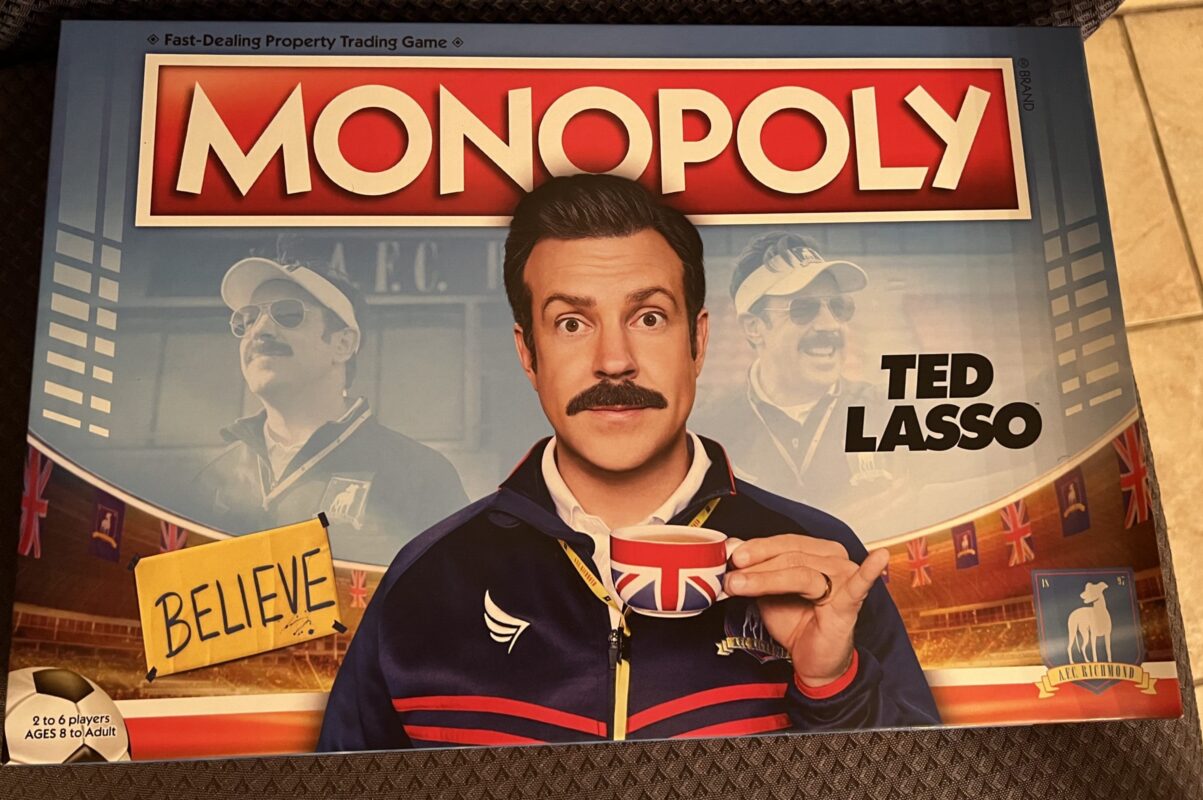
In addition, there are now many Ted Lasso commercial products being sold like Ted Lasso Monopoly games with BELIEVE cards, Ted Lasso clothing, Ted Lasso motivational books, Ted Lasso Dove lotion products for men, etc., many of which include Smith’s kindness, thoughtfulness, and BELIEVE philosophy.
The Lasso writers and actors often spoke about Terry Smith in the first year of the show because they wanted to use Terry Smith and the Terry Smith story to give their show credibility and to promote their show.
Here is just one of the many hundreds of online articles that shows Terry Smith being the inspiration for Ted Lasso, and shows that the Ted Lasso show is based upon Terry Smith.
Quote from Apple Magazine on April 23, 2021 – “The Ted Lasso series was actually inspired by the story of Terry Smith, an American gridiron football coach who took over the English association football team Chester City FC, and subsequently installed himself as the first-team coach.”

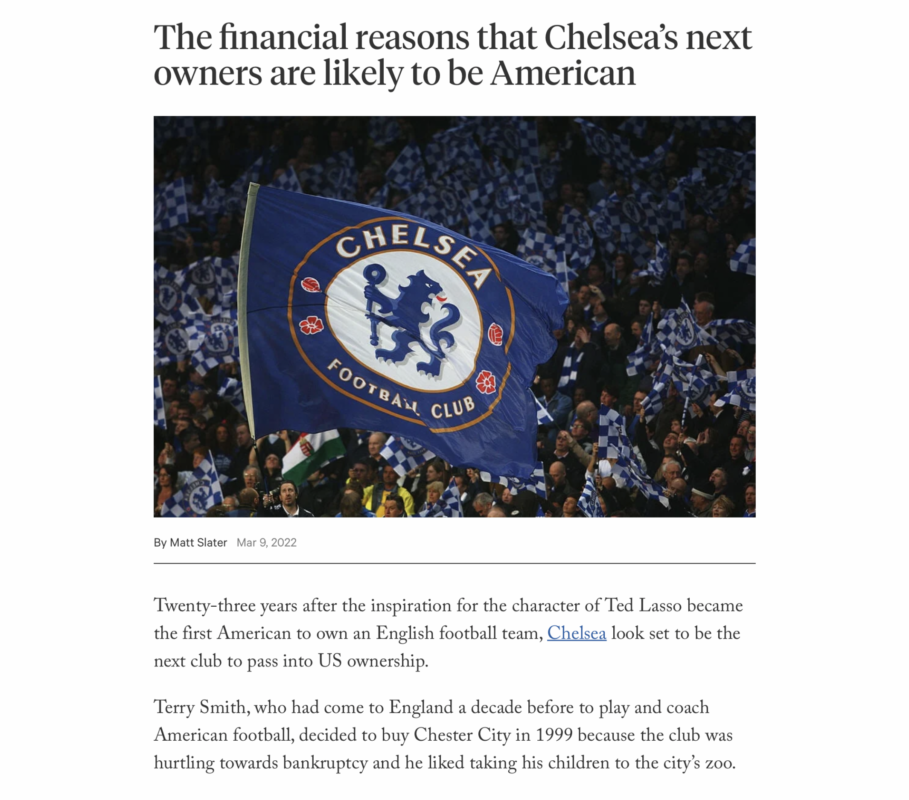
Here is a Forbes Magazine from 2022 that further shows how it was always common knowledge that Terry Smith was the inspiration for the character of Ted Lasso.
Here is another example from August 2020 when Brendan Hunt spoke about Terry Smith.
Quote from AppleTV and Yahoo Movies UK Interview in August 2020 where the magazine asked Hunt what Ted Lasso would do to motivate the England Soccer Team for the World Cup– “Brendan Hunt, who co-created the show and plays Lasso’s loyal assistant Coach Beard, thinks Lasso would reference an American who owned and managed Chester some 20 years ago: ‘I think he would do what Terry Smith did for Chester City back in the day. He would drape himself in the American flag and he would emphasize the American Dream, because that’s what I think English people love the most.’”
The interviewer did not even mention Terry Smith in the question, but Hunt associated Ted Lasso with Terry Smith so much that Hunt, when answering a question about Ted Lasso, immediately thought of and spoke about what Smith would do that Lasso should copy.
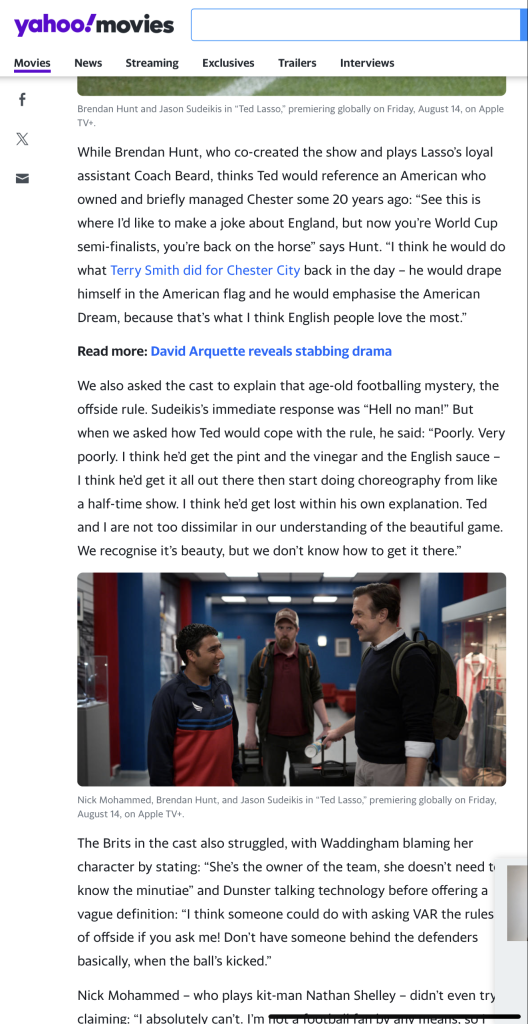
August 2020
There are hundreds more of these articles online from 2020 through a few years after 2020 that talk about Terry Smith being the inspiration for Ted Lasso, and so you can easily find them with a Google search.
Sudeikis, Hunt, and Kelly even chose the exact same blue and gold colors for Lasso’s AFC Richmond team that Smith’s Chester City team had.
Smith’s team wore a blue jersey with a gold logo, and a gold jersey with a blue logo, the same as Lasso’s team.
The BELIEVE poster that Ted Lasso put on the dressing wall is even blue and gold to match Terry Smith’s team colors.
The Ted Lasso positive personality and coaching style have also been copied from Terry Smith’s personality and coaching style that Smith has shown throughout his entire 30-year coaching career that is still going on with his head coaching today in The Canadian Baseball League, the highest professional baseball league in Canada, and with his position as League President of The Women’s Football Alliance, which is considered the NFL of the Women’s game.
Smith was and still is very positive and motivational with his players and with everyone, and Smith always speaks in a very caring and loving way to his players in the dressing room, including with unique personal anecdotes and analogies he comes up with on his own, and with life lessons he creates that will benefit his players in their personal lives.
In summary, Smith deeply cares about and loves his players and his students, and all of his players and students feel this deep care and love from Smith when he is with them.
For example, when Smith retired in 2017 from his position as a college professor and head of two departments in the Business School at Lees-McRae College, including as the head of the Sport Management Department and the head of the Sports and Fitness Department, his students had a dinner for him where they each got up and gave an emotional speech about how Smith had changed their lives so positively, speeches that were so emotional for the students that they cried, sometimes uncontrollably, throughout their speeches.
Smith has had this same loving influence on his players and students throughout his career, including to this day as the deeply-loved manager of the professional baseball team he manages and owns in the Canadian Baseball League, and as the deeply-loved president of The Women’s Football Alliance.
In fact, here is a letter that one of Smith’s college students from England, Nathan Watt, an outstanding student and award-winning soccer player and now coach, wrote.
“Terry Smith quickly became not just a favorite teacher of mine, but a mentor and guide for my career aspirations.
As someone who struggles with confidence in sport and life in moments, Terry constantly instilled in me confidence, along with a newfound self-belief that I could achieve any of my life goals.
Throughout this mentorship period, I was constantly challenged to deliver high quality work and push myself to the very limit.
Ever since our paths crossed, Terry has been one of my biggest advocates in life and still to this day is constantly reminding me to seek the highest of goals.
Never in my wildest dreams would I ever have envisioned that even though I graduated from Terry’s class over seven years ago, that we would remain in contact to this day and is the only teacher to continue to go out of his way to do so.
This is simply testament to the character he showcased during his time as my teacher; he always went above and beyond and still delivers!
Over the years I developed a wealth of knowledge from Terry, but most importantly about the need to remain humble, determined and hungry for success.
As a full-time coach and youth director, I constantly utilize many of the life skills he helped instill in me, and for that I am forever grateful.” – Nathan Watt
This sure sounds a whole lot like the positives that we see in Ted Lasso.
In fact, this is exactly what Ted Lasso does with his players in the Ted Lasso show.
Smith’s coaching style throughout his coaching career has also always been to try to get his players to BELIEVE in themselves and in each other.
Smith even wrote about his BELIEVE philosophy in a motivational book, The Hero Inside Of You. Smith wrote his book in 1998, which was published and sold throughout England and Europe a few months before he began coaching the English soccer team.
Therefore, the Ted Lasso character, Lasso’s coaching style, and Lasso incorporating the BELIEVE philosophy are all exactly like Smith.
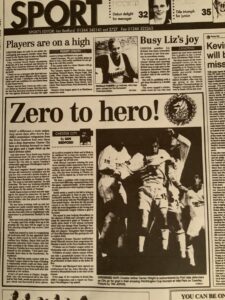
As an example, a 1999 Chester Chronicle newspaper article written by sports editor Ian Bedford titled, “Zero To Hero”, writes about Smith’s first match as manager of the English soccer club, where his team defeated a club in the Worthington Cup that was two divisions higher in the English League than Smith’s team, setting up a next round match for Smith’s team with Premier League Club Aston Villa.
Bedford writes, “And Terry Smith may find his motivational book The Hero Inside Of You becoming a best seller if he can continue to inspire the City side to repeat Tuesday’s memorable aggregate Worthington Cup triumph at Vale Park. The word ‘negative’ doesn’t appear in the 40-year-old American’s vocabulary and his aim for this weekend’s double-header at Torquay and at home to third division leaders Rochdale on Monday is simple. “We want to win both matches,” he said yesterday.”
This article shows how the media saw that Smith was never negative at any time, and how Smith was always very overly positive, just like the character Ted Lasso.
The facts also show that the recognized co-creators of the Ted Lasso show Jason Sudeikis, Brendan Hunt, and Joe Kelly have known all about Terry Smith and about Smith’s American football to soccer storylines since 1999.
Hunt has even spoken in interviews of how much they read and researched about Smith.
When Terry Smith was coaching the English soccer team in 1999 through 2001, the three co-creators of the Ted Lasso series, Jason Sudeikis, Brendan Hunt, and Joe Kelly were living and working at Boom Chicago, a well-known comedy theater in Amsterdam at this same time from 1999-2001. Amsterdam is just a short distance across the English Channel from England.
Sudeikis and Hunt have said in interviews that during their years in Amsterdam they were huge fans of English soccer, that they read about English soccer all the time, and that they would often travel the short distance by ferry across the channel to attend and watch English soccer matches.
During this time period of 1999-2001, Smith was famous in England because he had won so many National championships and European championships in American Football, including as the Great Britain National Team head coach.
Smith was also famous as the first and only American to ever coach a professional English soccer team, with, like Ted Lasso, special media emphasis on Smith’s transition from coaching American football to coaching soccer.
As a result, the British media wrote and talked about Smith every day, including in newspaper articles in national newspapers like The Mirror, The Sun, The Guardian, The Independent, The Manchester Evening News, etc., including every single day in regional and local newspapers, including in magazine articles in major magazines like FourFourTwo, including in national radio broadcasts such as a three-hour time slot on the national BBC radio, including on television broadcasts with the BBC and with ITV that spoke about Smith every week and even interviewed Smith on the BBC’s national television broadcasts of the FA Cup Draw, including when the BBC brought Smith as a special guest to the BBC television broadcasts of the FA Cup Draw where they interviewed Smith, and including several national television documentaries on Smith, including an hour-long national television documentary about Smith.
Therefore, Sudeikis, Hunt, and Kelly knew about Terry Smith in 1999-2001 when they were in Amsterdam watching English soccer programs on television all the time, such as Match of the Day on the BBC, like Sudeikis and Hunt have said they did.
Television shows that spoke about and interviewed Smith regularly.
Sudeikis, Hunt, and Kelly were huge English soccer fans, and in interviews they have said that every day they were in Amsterdam they played soccer video games almost all day, including playing the soccer video games before every show at Boom Chicago, and also played soccer video games late into the night after every show ended.
Smith was one of the soccer coaches in the video game that Sudeikis, Hunt, and Kelly played, and so they were able to choose Smith to coach their video game team.
With this soccer video game that Sudeikis, Hunt, and Kelly played, because the soccer industry in England and Europe knew about the motivation book that Smith had written, knew about all the National championships and European championships that Smith had coached his American football teams to achieve, and knew about Smith’s abilities to motivate his teams, then Smith had the highest ratings that a coach could have in the soccer video game with a 10 rating for motivating his players, and with a 10 rating for his positive relationships with his players and getting the best performances out of his players.
Therefore, the idea for the Ted Lasso character based upon Terry Smith began back in 1999 when Sudeikis, Hunt, and Kelly were in Amsterdam and first heard about Smith.
Brendan Hunt has admitted in interviews that he and his co-creators read and watched many things about Terry Smith before they created the Ted Lasso character, and before they wrote the Ted Lasso shows.
The fact that Sudeikis, Hunt, and Kelly knew about Smith in 1999-2001 is further proven by the fact that in an August 2020 AppleTV and Yahoo Movies UK magazine interview and video interview, Brendan Hunt, the co-creator of the show, spoke about Terry Smith where he referenced a 1999 magazine feature article about Smith that was in a 1999 magazine.
This 1999 magazine is not available anywhere online, and so the only two possible explanations are that Hunt, Sudeikis, and Kelly had possession of a hard copy of this article about Smith since 1999, or Hunt, Sudeikis, and Kelly had spent so many months and years researching Smith in 2019 before they wrote the Ted Lasso character and television series that they found a hard copy of this 1999 magazine from 21 years earlier.
Whichever of these two possibilities is true, they both prove that Hunt, Sudeikis, and Kelly knew about Terry Smith and the Terry Smith story from all the newspaper articles, magazine articles, and television documentaries about Smith before they created the Ted Lasso character, and before they wrote the Ted Lasso series.
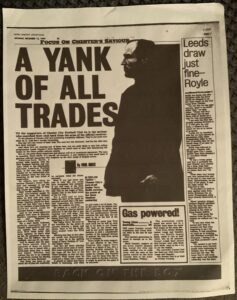
In fact, even the overall personality, accent, and persona of the Ted Lasso character was written and described about Smith in a December 1999 Manchester Evening News feature newspaper article about Smith.
This feature article written about Smith by the Manchester Evening News was following his team’s excellent match versus Manchester City in the 3rd Round of the FA Cup.
The Manchester Evening News writer, Paul Hince, intended to write a negative article about Smith, but in his interview with Smith he found that he liked Smith, and so he wrote many positive things about Smith.
Hince wrote about how tough Smith was to be standing in his blazer and slacks for hours in the rain and the cold, in comparison to the “softie management team from Manchester City who were dressed for an expedition to the North Pole”.
Hince also compared Smith to a tough US Marshall and wrote, “Want to bet his (Smith’s) forefathers helped to tame the Wild West.”
Hince also referred to Smith as a very tough western cowboy sheriff when he wrote, “For a good half an hour before the start of the match Terry walked around “like a US Marshall inspecting his defenses before the outlaws hit town”.
The Ted Lasso creators apparently paid attention to these western descriptions of Smith because they made the Ted Lasso character a cowboy from the west.
Hince also wrote that Smith was “charming”, that Smith works very hard and does so many jobs for the Club, including the low-level, time-consuming, and unappreciated jobs that other people do not want to do, and that Smith showed a lot of caring toward his players about their feelings and emotions.
Likewise, in Ted Lasso, in Episode 3 of Season 1, Lasso is set up with a newspaper writer who intends to write a negative article about Lasso, just like what had happened to Smith.
However, just like how the writer ended up liking Smith and calling Smith “charming”, the writer in the Ted Lasso show ends up liking Lasso, and he writes positive things about him.
In addition, in the final lines of the real article about Smith, Hince writes, “But Smith knows what he wants for Chester City Football Club. And for those who like to see a smile on the face of soccer, it might be good for the game if he does.” – End of Article
Likewise, the final lines of the article written in Ted Lasso says, “And though I believe Ted Lasso will fail here and Richmond will suffer the embarrassment of relegation, I won’t gloat when it happens because I can’t help but root for him.” – End of Article
Therefore, both of these final lines of the Manchester Evening News article about Smith and the Lasso article are saying the exact same thing because they are saying that the writer supports Smith and the writer supports Lasso.
The words “root for” mean the same hopefulness for success that the final words of the article about Smith do.
The writers of Lasso also chose Ted as their name, which is as close as it can be to Terry, and the last name Lasso is a western term for a rope that matches the description of the way the Manchester Evening News writer described Smith in the article.
As a result, the logical explanation is that the creators of Ted Lasso took this newspaper storyline from Episode 3 of Season 1, and Lasso’s entire western personality and western name from this Manchester Evening News article about Smith that referred to Smith with western comparisons.
Also shown in this article is that Terry Smith always stood on the touchline throughout every match, whereas other managers sit in the team bench dugouts, stand inside the dugouts, or even sit a few rows back in the stands.
However, the writers saw what Smith did, and likewise Ted Lasso always stands on the touchline throughout every match.
In addition, the main overriding theme of the Ted Lasso series is the BELIEVE philosophy and BELIEVE poster that Lasso places on the dressing room wall.
This main theme was exactly what Smith always did, who had come up with and developed his BELIEVE philosophy throughout his coaching career.
Terry Smith even wrote about his BELIEVE philosophy in the book he wrote, The Hero Inside Of You, that was published in 1998 and sold throughout England and Europe seven months before he purchased and coached the English soccer team.
Here is one example of what Smith wrote in his 1998 book about his BELIEVE philosophy:
“The reason that practice makes perfect is because by practicing something we will occasionally, by chance, do it successfully. As a result of this success, we will then Believe that we can do it, and so we will begin to do it successfully more often. Perfection is thus achieved through a gradual process of increasing Belief, just like going up a flight of stairs one step at a time. In reality, therefore, practice actually leads to Belief, and Belief leads to perfection. The Belief is the key factor. Thus, the stronger, deeper, and more committed we BELIEVE, the faster we will reach our intended Goals. Make yourself really BELIEVE that you can, and you can do anything.”
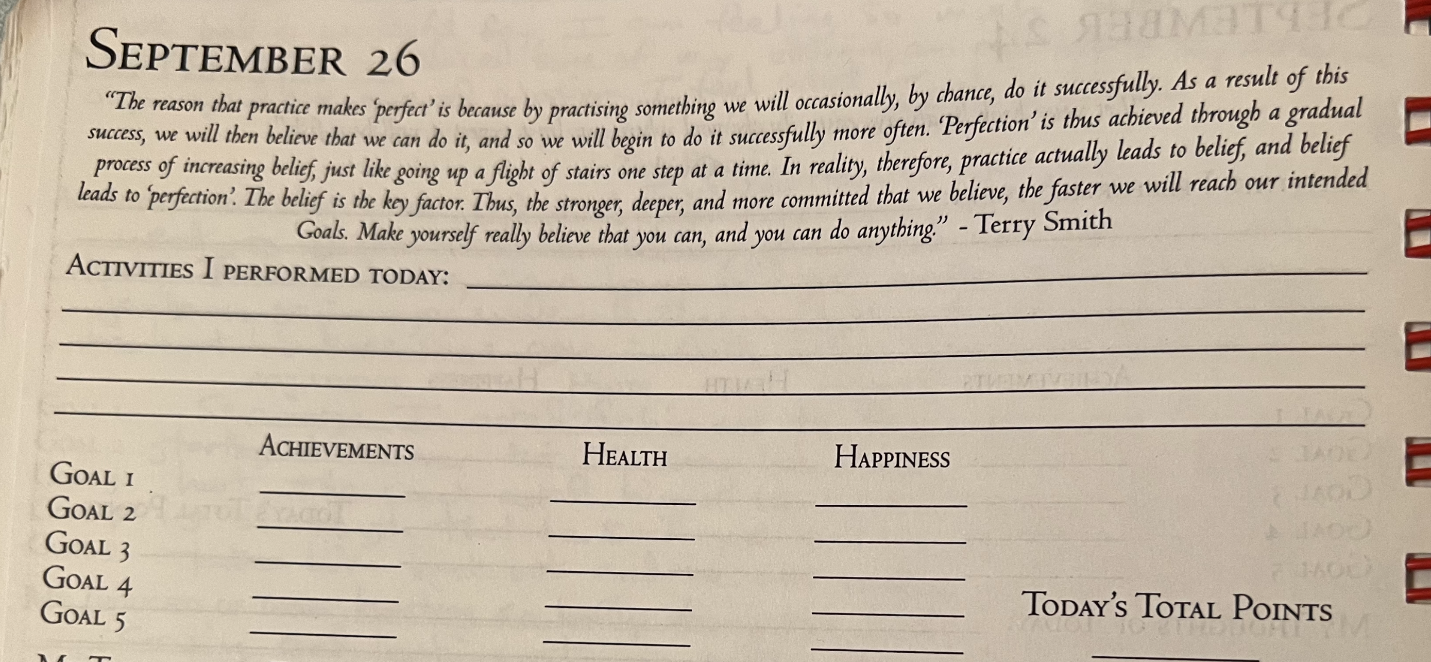
Here is another example of what Smith wrote in his book in 1998:
“A man must Believe in himself before he can believe that he can achieve his Goals. But to achieve self-belief he must first achieve success. Therefore, to achieve success, go after your Goals with every ounce of effort and enthusiasm that you can put together, and with each small success you will find increased self-belief. The Stairway to your Goals and to Excellence is followed like this, one step up at a time.”
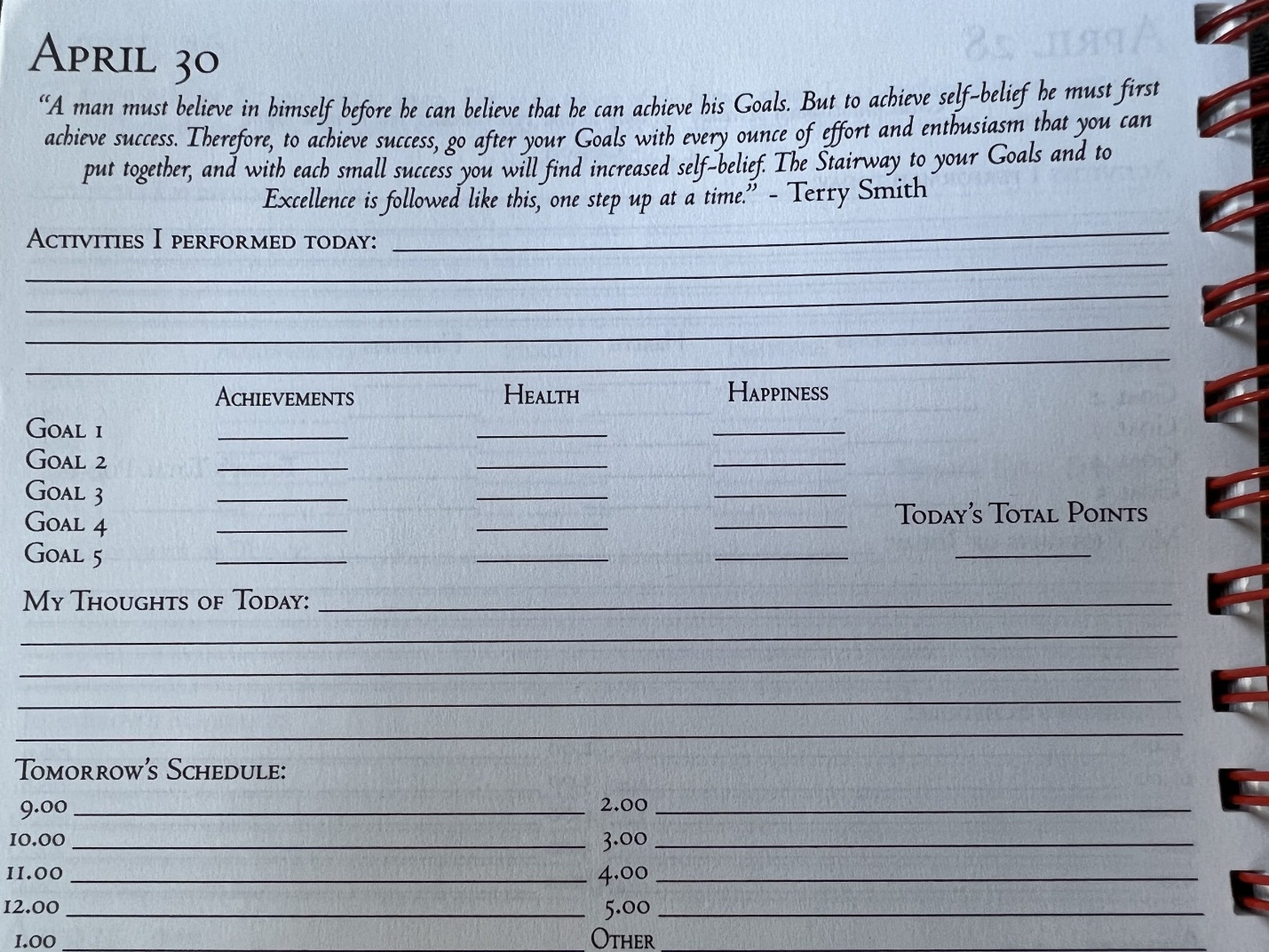
Here is another example of what Smith wrote in his 1998 book:
“The World is full of people who want to see something before they will Believe it is possible. ‘Seeing is believing’, they say. However, people who achieve greatness Believe and see it in their own minds first, far before it ever becomes visible to the rest of the World.”
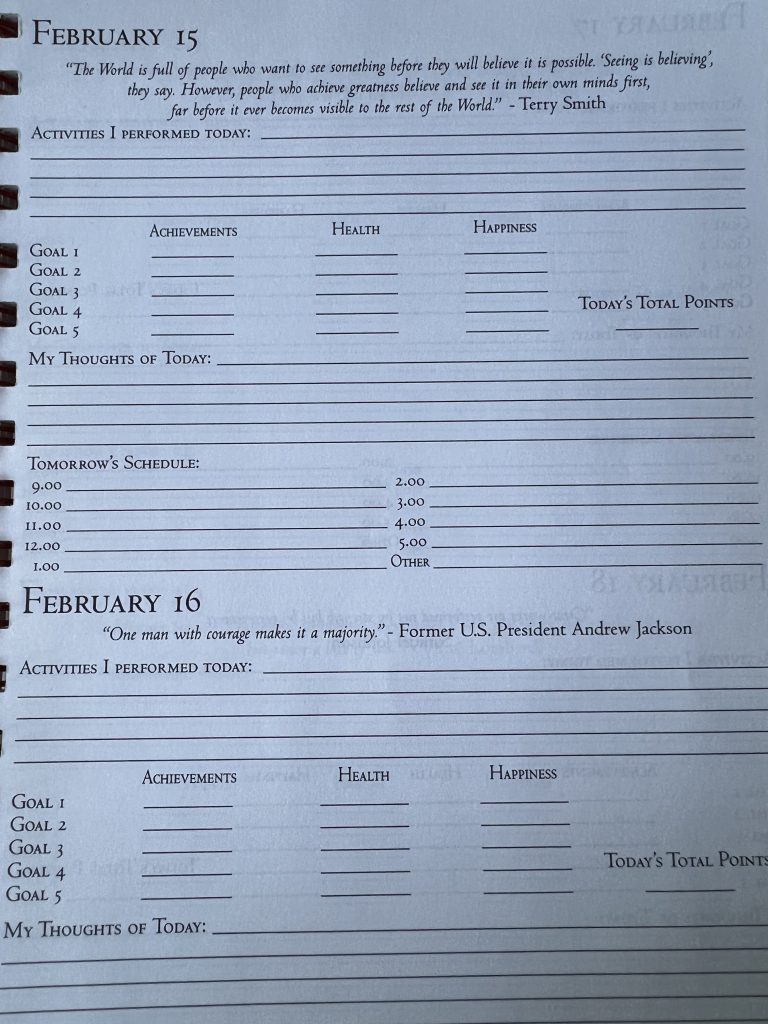
Terry Smith wrote his book in 1998 after his American football teams had won so many National Championships and European Championships, and after he had won the European Nations Championship as the Great Britain National Team head coach, and his book was published a few months before he became the Head Coach/Manager of the English soccer team.
Therefore, Smith brought his Believe philosophy as a part of him when he began coaching the English soccer team.
For example, in the first days that Smith took over the English soccer club as the first American in history to coach a professional English soccer team, Smith stated to the media that his Goal for the team was to get two promotions in three years to reach the First Division. Smith’s very positive attitude was new to the media because they were not used to a manager speaking in such very positive ways.
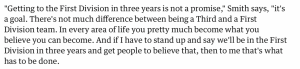
Quote of Terry Smith in 1999 London Guardian newspaper article
Within days of taking over the team, Smith said in the Guardian national newspaper in August 1999,
“Getting to the First Division in three years is not a promise, it’s a goal. There’s not much difference between being a Third and a First Division team. In every area of Life you pretty much become what you Believe you can become. And if I have to stand up and say we’ll be in the First Division in three years and get people to Believe that, then to me that’s what has to be done.”
This Guardian national newspaper article was and still is available online for the Ted Lasso writers and actors when they came up with the Ted Lasso character, and when they saw this BELIEVE philosophy from Smith that became the core and cornerstone of the entire Ted Lasso series.
And just like Smith said this quote in the very first days he took over the soccer team, Ted Lasso put the BELIEVE poster on the wall of the dressing room during the very first Ted Lasso episode of the first season.
Smith continued to coach his Believe philosophy the entire time that Smith was coaching the English soccer team.
For example, he prepared a written Scouting Report and a written Game Plan for every soccer match he coached, with every Scouting Report and every Game Plan being an average of seven pages long.
On the entire front cover of every match Scouting Report, and on the entire front cover of every Game Plan, Smith handwrote the word BELIEVE in large capital letters.
Smith gave a copy of every Scouting Report and every Game Plan to every player in the dressing room, all with the handwritten word BELIEVE in large capital letters on the front cover, and Smith put extra copies of the Scouting Reports and Game Plans all around the dressing room on the benches and on the wall, all with the word BELIEVE written and showing with large capital letters on their front covers.
The Ted Lasso writers and actors saw this BELIEVE philosophy from Smith, and Lasso put a handwritten BELIEVE poster on the dressing room wall, just like Smith did.
In fact, this BELIEVE philosophy is the core theme of the entire Ted Lasso series, with Smith’s BELIEVE philosophy being a very important part of most of the episode storylines throughout the show’s three seasons.
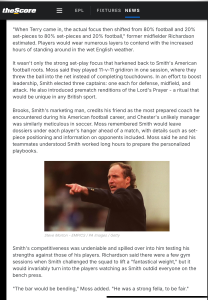
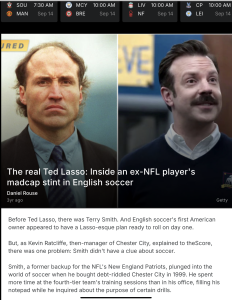
The above article writes about the motivating and comprehensive Scouting Reports and Game Plans that Smith gave to his players in the dressing room before every match.
You can also watch the soccer team captains discuss the detailed, always positive, and motivating content that Smith wrote in his Scouting Reports and Game Plans by watching the television documentary still available on YouTube that is titled, “Chester City 1 – Exeter City 1 (1999).
In a second hour-long national television documentary on ITV, you can also see Smith holding and going through one of his written Scouting Reports and Game Plans as he talks to his players in the dressing room before a match.
In the years prior to the Ted Lasso show beginning, the creators, writers, and actors of Ted Lasso also knew about Terry Smith winning many American football championships in Great Britain and in Europe, and they did very extensive research to learn about Smith moving from coaching the sport of American Football to coaching a professional English Soccer team because Smith was the first American to ever own, manage, or coach a professional soccer team in England and in Europe.
Since Smith was the first American to do anything in English soccer, then the British media was very interested in Smith’s story, and so the media produced a very large amount of newspaper articles, magazine feature articles, television shows, and television documentaries about Smith that was available, and that are still available, for the Lasso creators, writers, and actors to research, learn from, and make into storylines for the Lasso shows.
With all this media content available to them about Smith’s actions and experiences in English soccer, then the Ted Lasso Show creators, writers, and actors spent a great deal of time researching and studying all these newspaper articles, magazine articles, television shows, and television documentaries about Smith for ideas to write into their Ted Lasso shows.
In fact, the Lasso show creators, writers, and actors researched Smith’s background and experiences so thoroughly that they even found magazine articles from more than twenty years before that are not available anywhere online, articles that were written before the internet was utilized like it is now.
Therefore, it would have taken the Ted Lasso creators, writers, and actors many months, and possibly even years of research time to search for and find all these newspaper and magazine articles about Smith.
We know they looked for and found these old and difficult-to-find articles about Smith because the Ted Lasso Show creators, writers, and actors often spoke about Smith, and often spoke about these articles written on Smith.
Before Season 1 of Ted Lasso even began, the writers and actors did interviews with AppleTV and with Yahoo Movies UK, and with other media outlets, mentioning and utilizing the Smith connection to add credibility to the Ted Lasso character and series, and to publicly promote the Ted Lasso shows.
For example, in the quote at the top of this document, Brendan Hunt refers to a 1999 magazine feature article about Smith. This article about Smith was from 21 years before the first season of Ted Lasso and was not available anywhere online.
Therefore, the writers and actors had to have done a huge amount of research on Smith to come across this article in their search by finding a hard copy of this magazine.
For example, in this AppleTV video and magazine interview from August 2020, which was right at the beginning of the first season of the Ted Lasso series, Brendan Hunt, who is a co-creator of the Ted Lasso show, and who plays Lasso’s Assistant Manager Coach Beard, is asked what Ted Lasso would say to motivate the England National Soccer Team.
Hunt responds with one answer by saying that Ted Lasso would motivate the England Team by “doing what Terry Smith did for Chester City back in the day. He would drape himself in the American flag and he would emphasize the American Dream, because that’s what I think English people love the most.”
On the front-page of this 1999 magazine article about Smith, there is a full-page picture of Smith standing on the stadium soccer field with a very large American flag draped around him.
The magazine journalists had brought the American flag with them to the interview with Smith, and they had Smith stand with the American flag draped around him for the cover photo.
The interview response by Ted Lasso show co-creator Brendan Hunt on AppleTV is very revealing because it shows that Hunt knew a huge amount about Smith in order to choose to refer to Smith off the top of his head in an interview answer.
It also shows that Hunt thinks Smith is a person who motivates other people like Ted Lasso does.
In addition, it shows that Hunt thinks Smith promotes the American Dream.
The interviewer did not even mention Terry Smith in the question to Hunt, but because Hunt associates Lasso with Smith so much, then when Hunt spoke about Lasso, Hunt thought of and spoke about what Smith would do that Lasso should copy.
Most revealing, by Hunt referring to what Smith did 21 years earlier in the magazine article that was and is not available online, then Hunt is proving the huge amount of research that he and his co-creators had done on Smith before they began writing the Ted Lasso series.
In fact, Sudeikis and Hunt and the other writers have said that they wrote the entire first season of Ted Lasso episodes in only three days. To write an entire season of shows so quickly further supports the idea that the writers were utilizing story ideas from what Terry Smith did.
Therefore, Hunt speaking about Smith in his AppleTV interview, and speaking about reading a magazine article about Smith from 21 years earlier that is only available as a hard copy, further supports exactly what Apple Magazine said in April 2021, during the first season of the Ted Lasso Show, when Apple Magazine wrote, “The Ted Lasso series was actually inspired by the story of Terry Smith, an American gridiron football coach who took over the English association football team Chester City FC, and subsequently installed himself as the first-team coach.”
In the following pages we have included more than 50 storylines and items in the Ted Lasso Show that are the same as Terry Smith’s real-life actions.
There can be no debate that the co-creators, writers, and actors knew about all the Terry Smith storylines because co-creator and actor Brendan Hunt spoke in an AppleTV interview about Smith, because Hunt spoke about the 1999 magazine feature article about Smith, because Hunt has said in interviews that he read a large amount about Terry Smith before writing the Ted Lasso show, and because co-writer Brett Goldstein spoke in a 2020 Esquire magazine article about the hour-long television documentary on Terry Smith.
But before we get into these 50 storylines, in order to explain why the Ted Lasso creators, writers, and actors would have researched and studied Smith’s background before they began writing Ted Lasso, then it would be helpful to let you know Smith’s sports background in England with both American Football and Soccer, so you can see why Smith would be someone who the writers and actors would want to emulate.
And so you can see the identical storylines and similarities that the Lasso creators, writers, and actors wrote for the Ted Lasso character and in the Ted Lasso shows.
Terry Smith played four sports in high school, in football as quarterback, in baseball as shortstop, in basketball as point guard, and in wrestling, winning championships in three of the sports and finishing in second place in baseball after Smith got hurt and could not play in the final game of the season.
Smith played three sports at Furman University, where he is the last three-sport athlete in Furman history, playing football where he set several school tackling records for a defensive back as the free safety on Furman’s first two-ever outright Championships in school history, and was sometimes chosen as the state of South Carolina’s most outstanding college defensive player, baseball where he was chosen as the MVP and is still the second-leading career hitter in school’s 100 years of baseball history, and track where he ran the 100 meter, 200 meter, 400 meter, and all the 4×100, 4×200, and 4×400 relays.
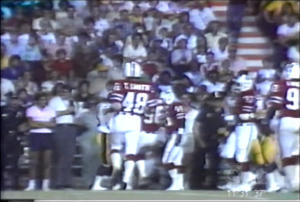
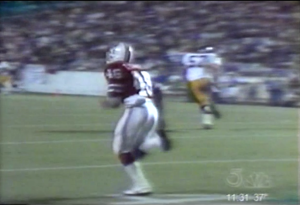
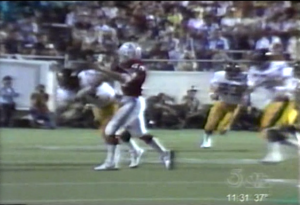
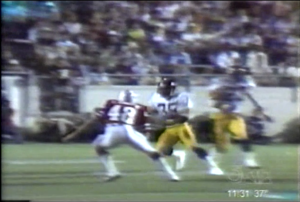
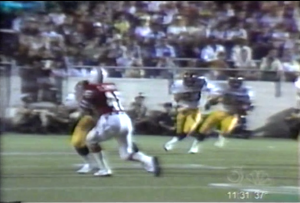
As a free safety in the NFL, in combine testing he was the strongest defensive back on the New England Patriots team in all the weight training testing, he was ranked higher than the top of the NFL chart as a 10-plus for all agility and quickness drills such as the pro shuttle and three cone shuttle, he led the team in interceptions during training camp, and he was the hardest-hitting and tackling defensive back on the team by a long way.
.
.
.
.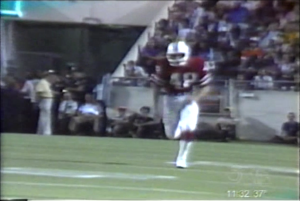
Smith’s NFL career ended because he had a major knee injury playing for the Patriots in a game versus the Eagles while he was making a tackle as the headhunter on the kick-off team. It was such a very serious injury that it required major reconstructive surgery to repair two torn ligaments and the entire cartilage that had been torn out.
Smith’s knee did not pass the team physical the following year, and so he was not medically eligible to continue to play.
After going to play in the USFL professional football league and his knee being injured again, he went to Spring Training with the Cincinnati Reds in baseball, and he signed with the Miami Marlins professional baseball team.
Following professional baseball, he began a college coaching career as a defensive coordinator where his defense led the nation in rush defense by allowing only 1.2 yards per carry for the entire season, and he was chosen to coach as the defensive coordinator in two National Junior College All-Star Games, winning both games and holding the opposing offense to minus 12 yards rushing for the entire game.
After a few seasons of college coaching, he was offered the opportunity to become the Head Coach of an American football team in England, and he chose to accept this offer because he wanted to try to expand the sport of American football in Britain, Europe, and around the world.
The Manchester, England team he was taking over had finished in last place in the NFL-supported League the year before he arrived, winning only two games very early in the previous season, and being defeated by more than 60 points in their final games of that previous season.
Smith had originally planned to only be the head coach and not to be a player, but because his team had not signed its full number of American players, and his team had two less American players than any of the other teams, then Smith went ahead and dressed in uniform for the first game, just in case, making him the League’s only Player/Head Coach.
This first game was against the same opponent who had defeated the team in the final game the previous season by 60 points before Smith arrived.
Smith did not intend to play, but when his team was losing in the first quarter by 14 points, then his passion and competitiveness took over, and so he tossed his coaching play sheet onto the sideline, buckled his chinstrap, and ran onto the field.
Playing both wide receiver on offense and free safety on defense, Smith caught three long touchdown passes on three deep post routes, and on defense he had two pass interceptions, leading his team to come from fourteen points behind to win the game.
This win started his team’s 23 straight wins in Smith’s first 23 games as Player/Head Coach, to set the all-time League, National, and European records for consecutive wins that are still all-time records today.
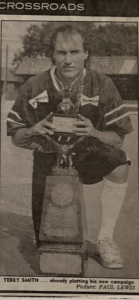
This began Smith’s 10-year career as a Player/Head Coach where he had several 1,000 yard receiving seasons, led Europe in receiving twice, set the all-time League and Great Britain record with 15 pass receptions in a single game, set 22 franchise records for receiving and pass interceptions, set three all-time League, Great Britain, and European records for interceptions with 12 interceptions in a season, with 3 interceptions in a single game, and with 175 yards of interception returns in a single game, and set the League record for career interceptions.
In the process, Smith was chosen to the All-Great Britain Team many times as both a wide receiver and as a free safety, and he was chosen to the All-European Team three times as a wide receiver and as a free safety.
Smith was also chosen to the Great Britain Football Hall of Fame as both a Player and as a Head Coach, and Smith was chosen to the International Football Hall of Fame by a worldwide selection committee.
In recent years, BAFA, the government body for American Football in Great Britain, chose Smith as the “greatest American defensive player to ever play in Great Britain.”
In addition, the Great Britain Football Hall of Fame wrote that Smith was “the greatest coach who had ever set foot on British soil.”
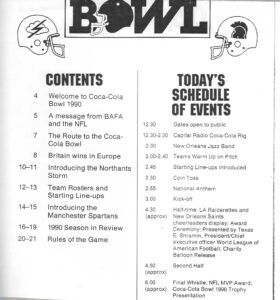
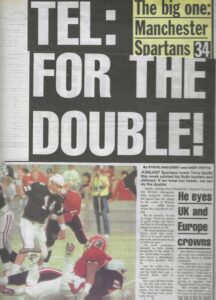
As Player/Head Coach, taking over the two-win Manchester Spartans team from the previous year, he led his team to a perfect 14-0 record in his first season, winning all 14 games and losing none, to set the all-time League, Great Britain, and European records for wins in a season that still stand as records today.
With the Manchester Spartans, where his team practiced on the playing field right next to the Manchester United Old Trafford Soccer Stadium, his teams won 56 games and only lost 2 games in his first three seasons.
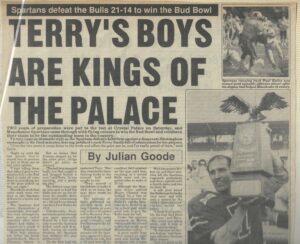
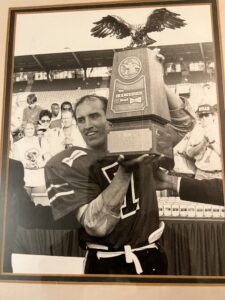
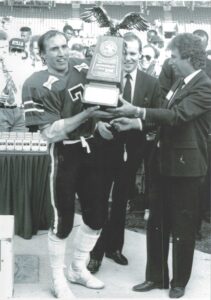
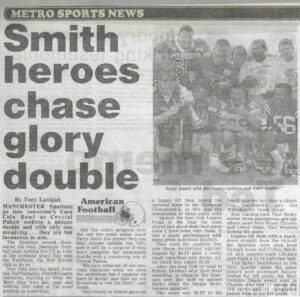
In his second season, his Spartans team won the National Championship and also won the Budweiser Bowl Championship at Crystal Palace in London.
In his third season, his Spartans again won the National Championship and also won the Coca-Cola Bowl Championship at Crystal Palace in London.
After each of these National Championship victories, the NFL head office presented the National Championship trophy to Smith on the playing field at Wembley Stadium, in front of 110,000 spectators and a worldwide television audience during the American Bowl game, a game that was played each year by NFL teams.
Throughout these seasons, Smith was working very closely with the NFL to build the sport of American Football in Great Britain, Europe, and worldwide, and he traveled around the country working with schools, schoolchildren, and youth teams.
On an international level, prior to Smith taking over as head coach, no team from Great Britain had ever won a single game against a European or International country.
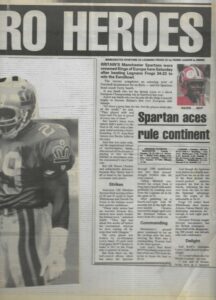
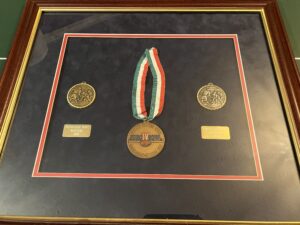
However, on Smith’s first attempt with the Spartans, they defeated Dublin in Dublin, Ireland in the Final Eight of Europe, then defeated Amsterdam in Manchester, England in the European Quarter-Final, then defeated Berlin in Italy in the European Semi-Final, and then defeated Milan in Rimini, Italy in the European Championship Game to win the first-ever European Championship for a team from Great Britain.

After Smith’s first season, where his Spartans team went 14-0, the British National Government Body for American football selected Smith to be the Great Britain National Team Head Coach, which is the same as being an Olympic Team Head Coach.
Therefore, Smith coached as both the Great Britain National Team Head Coach and as the Manchester Spartans Team Player/Head Coach at the same time, working year-round continuously and non-stop in both roles.
As the Great Britain National Team Head Coach, he traveled across all of England, Scotland, Wales, and Northern Ireland to scout, select, train, and coach the players that he selected for the Great Britain National Team.
Once again, just like with the Spartans, prior to Smith’s appointment as Head Coach, the Great Britain National Team had never won a single game in European or International competition.
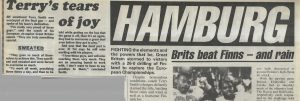
However, in Smith’s first season as the National Team Head Coach, his team went undefeated, winning 35-6 against France in the European Nations Quarter-Final in Birmingham, England, winning 38-6 against Germany in the European Nations Semi-Final at Volkspark Stadium in Hamburg, Germany, and winning 26-0 in the European Nations Championship Game against Finland in Hamburg, Germany in the European Championship Final.
Therefore, Smith’s team won the Great Britain National Team’s first-ever European Nations Championship by a combined score of 99-12.
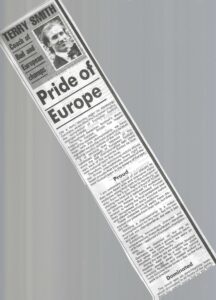
As a result of these two European Championships with two different teams, Smith is the only Head Coach in European history to have won both the European Championship with a League Team and to have also won the European Nations Championship with a National Team.
At one point during only a 364-day period, and so in one day less than a year, Smith’s teams won two National Championships, the Budweiser Bowl Championship, the Coca-Cola Bowl Championship, a European Championship with the Spartans, and a European Nations Championship with the Great Britain National Team, for an incredible total of 6 National Championships, Bowl Championships, and European Championships in less than a year.
And to display what a tremendous motivator and coach Smith is, he had started coaching these two teams just one year earlier with two teams that had not won any games.
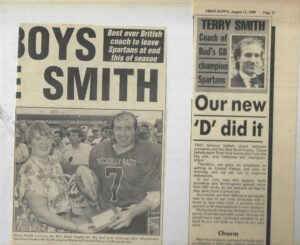
Therefore, a very large part of Smith’s coaching success was based upon him working very hard, and was based upon Smith motivating and inspiring his players to Believe in themselves and to achieve their very highest levels of performance.
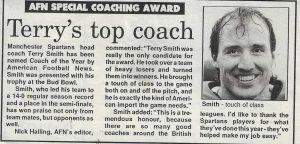
During these years, Smith was chosen as the Great Britain National Coach of the Year three years in a row, he was chosen as the European Coach of the year two years in a row, he was selected to the International American Football Hall of Fame, he was selected to the Great Britain Hall of Fame, and he was nominated to Queen Elizabeth II for year-end awards.
As a result, because of all this success, and because he was the Great Britain National Team Head Coach, then he was the primary leader and the most well-known Player and Head Coach in the entire sport of American Football in Great Britain and in Europe.
In this leadership role, he was a syndicated columnist where he had his own column in several nationwide newspapers and magazines, and he was a feature writer for nationwide newspapers and magazines.
He was also on a weekly nationwide BBC Radio show, he was very regularly on the nationwide television breakfast programs that are like our Good Morning America shows, he was an announcer and studio host for the NFL games that were broadcast in Great Britain on Sky Sports, which was Great Britain’s version of ESPN, and he wrote a motivation book sold throughout Europe titled THE HERO INSIDE OF YOU that was based upon a Goal-Setting Plan he had personally developed while he was in college.
Smith created and designed his book to help readers to set Goals and to create a Plan for their Lives that would lead them to successfully reach and achieve their Goals.
Therefore, when Smith became interested in the sport of soccer, then he had a background of being the most publicly known person in Great Britain and in Europe for the sport of American football.
His Spartans team trained right next to the Manchester United Old Trafford Soccer Stadium, and so Smith was already a big fan of both soccer and Manchester United before he got involved in the sport of soccer.
In fact, every summer Smith would coach at the Bobby Charlton Sports School in Manchester, England. Sir Bobby Charlton had been a fantastic player for Manchester United and for the England National Team, including during England’s World Cup Win in 1966.
At his Sports School, Smith was in charge of teaching all the American sports for Manchester United’s Sir Charlton.
Then, one day Smith heard about Chester City Football Club, which is about 35 miles west of Manchester, because Chester City had been in a court-ordered form of financial bankruptcy for the past year, and so the Club was about to close and go out of business after 114 years of playing since 1885.
In an effort to save the soccer Club, Smith purchased the Club and personally took over the entire debt of the Club that was more than a Million British Pounds of debts, putting Smith into a position where he personally owed all of the Club’s debts.
The challenges facing Smith to save the Club from going out of business were very significant. Not only did the Club have 1 Million British Pounds of debt, but the Club was also losing close to an additional Million Pounds every year.
Therefore, Smith had to not only find a way to keep from losing any more money and balancing the yearly budget, but he also had to make enough profit each year to pay off the very large amount of debts that the Club owed.
To keep the Club out of bankruptcy, the court had only given Smith a maximum of three years to pay off all the debts. This meant that Smith had to pay the debts off within those three years or else the Club would be closed down and Smith would personally owe the money himself.
A second big challenge Smith was facing is that the government-appointed administrator, during the previous season, had been forced to sell and transfer almost all of the Club’s veteran players to other teams in order to keep the Club debts from getting larger.
As a result, when Smith purchased the Club, the team had only a very small number of players, almost all of whom were very young.
In fact, some of Smith’s starting players on the first team were so young that they were still in the under 17-year-old youth apprenticeship program.
To make things more difficult, the season had already started when Smith purchased the Club, and so there were not any available players to sign because all the players in England were already playing for other Clubs.
When Smith purchased the Club, he became the chief executive and the general manager, and he chose not to get paid for any of his work with either of these jobs because he wanted the Club to save money and succeed.
However, three matches into the League season, the team’s head coach/manager resigned after the manager’s team had lost all three League matches they had played, and after the manager’s team had been shutout in all three of those matches without scoring a single goal.
This former manager told the soccer authorities that he had resigned because Smith had always been telling the former manager that the manager was doing a great job. He also said that Smith kept putting his arm around the former manager and speaking positively about the great job the former manager was doing.
This former manager said that he couldn’t take this very positive behavior by Smith anymore, and that he couldn’t take how positive Smith was being toward him.
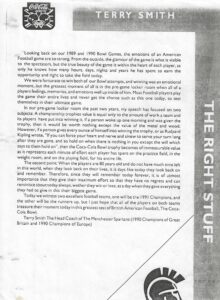
After the former manager resigned, the manager claimed he had a previously unknown second coaching contract hidden in an unused filing cabinet at the stadium, in addition to the regular coaching contract that everyone knew about.
He said that this unknown contract had a very unusual clause in it that required the Club to pay him what was equal to about four years of salary if the Club was purchased by a new owner, and if the manager ever chose to resign for any reason.
Many legal people said this unknown claim should not have been valid because the government-appointed administrator, who had been operating the Club during the year before Smith came, did not know about this unknown contract, either.
The administrator said it had been required by law that all contracts of any kind needed to be shown and given to the administrator during the previous year in order for a contract to be valid.
Therefore, since this unknown second contract had never been given to the administrator during the entire year of administration, and had never been shown to Smith before he purchased the Club, then lawyers told the Club that the contract should not be legally valid.
However, this previously unknown second contract was still allowed by the soccer authorities for no clearly given reason. The soccer authorities apologized to Smith for their decision, and said that the situation was not fair to Smith, but said they felt they were being legally correct.
As a result, with the Club already in huge debt, with the Club already losing very large amounts of money every year that added to the Club’s huge debt each year, and with this four years of salary claim being added on top of the debt, then there was no way that the Club could afford to hire and pay for both the previous manager and for a new manager.
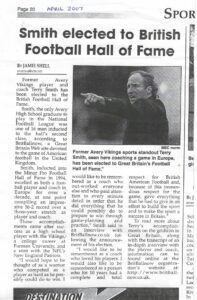
Smith decided that because of his many years of coaching experience in American football, and because he was willing to volunteer to do the job for free, then it was in the best financial interests of the Club for Smith to become the head coach/manager. Again working for free so that it would not cost the Club any money.
This resulted in Smith doing three jobs at the Club for free, including being the chief executive, the general manager, and the head coach/manager, all of which he did for free to save the Club from getting further into debt.
Another reason that Smith assigned himself to do the job of head coach/manager is because with all the debts that the Club had to pay off, then the Club had barely enough players to fill a team, and the Club could not afford to bring in any veteran English players to try to improve the team.
Therefore, with such a small number of players, all of whom were very young, and without money to bring in new players, then no other manager except Smith would have had the Belief in his young players like Smith did, and no other manager would have been willing to take on the manager’s job in such an extremely difficult playing situation and financial situation.
Smith put together a four-person coaching staff that included the assistant manager, the promotion of the youth team manager to assistant coach, and an additional third assistant coach.
He relied significantly on his assistant coaches for their knowledge of the game, especially in the early days, and Smith contributed his considerable head coaching experience to building and developing practice plan structure, work ethic, positive attitude, motivation, Belief, and weight training/physical training in an effort to try to improve and develop the Club’s young players so they would be able to reach their highest and greatest potential.
Smith had a small number of players, and a very young and inexperienced team, because the Club was under extreme pressure to pay off all its debts, and so Smith’s focus, along with his assistant coaches, was on developing their young players.
With veteran English players already playing for other Clubs, especially so early in the season, then there were not any veteran English players available.
In an effort to increase the number of players on the team, Smith signed a couple of players on loan from other clubs, and he signed some players from all around the world who were either not on any teams in their home countries, or who were free transfers because soccer was not as big of a sport in their home countries, including young players from the United States, Canada, Trinidad and Tobago, Romania, and Ghana.
In English soccer at the time, there were very few foreign players playing in English football because the English managers and team owners felt that their home-grown English players were better than foreign players.
The English managers and team owners especially thought that their English players were better than any American players because people in the English game, at that time, did not have any respect at all for American soccer.
For example, during a national BBC television interview, Sir Alex Ferguson, the championship-winning Manchester United Coach, was asked by the BBC interviewer about Terry Smith becoming the coach.
Sir Alex did not say anything negative about Smith because he felt a loyalty to Smith after Smith had won so many American football National Championships and European Championships in Manchester, and after Smith had coached all the American sports every summer at the Manchester United Sports Schools. But Sir Alex did say, “Americans don’t know anything about football.”
With other teams not looking for foreign players, then Smith was able to sign several foreign players who had slipped through the cracks in their home countries, or players who were able to get free releases from their home country teams because the sport of soccer was not as big in those countries.
Even soccer in America was in its early growth stages because the MLS had only begun playing three years earlier, and the MLS only had ten teams.
Therefore, Smith was the first English manager in England soccer history to bring in a large number of foreign players.
In today’s soccer world, all the English clubs have players from all around the world, and so Smith was the first person to see this vision for the future of English soccer before the English managers did.
When Smith began coaching the soccer club, the team was in last place in the League without scoring a goal or getting a single point in the standings. The team had lost all three of the League games they had played without scoring a single goal in any of these matches by a combined score of 0-8.
Within the first couple of days of Smith becoming manager, the team captain said that the captain and the players were very happy with Smith’s coaching because with Smith’s very organized practice plans then practices were being productive, that the team was working on specific skills and strategies to improve on in practice for the first time all year, that the players and team were improving every day, that the players had a new impetus and a new desire to succeed because they had felt down emotionally before Smith began coaching, that the players are learning something new every day in practice because of Smith’s organized practice plans, that the players are getting better every day, and that the players have positive things to think about when they go home after practice.
In Smith’s first match in charge, his team played a Major Cup match against Port Vale, a Club that was in the First Division, two divisions higher in the League than Smith’s team was.
However, despite being such a huge underdog, Smith’s team scored two goals in the first ten minutes of the match to take a 2-0 lead, and his team scored 4 goals to win the Cup Round and make it to the next Round of the Worthington Cup against Premier League Club Aston Villa.
All of the media called it the most exciting match they had seen the team play in more than 20 years, and most of the local media and fans said it was the best game they had ever seen the team play in its 115-year history.
It was a great night at Smith’s first match as manager, with the fans and supporters of the Club singing and chanting Smith’s name from high up in the stands.
In the team’s next match, a League match away at Torquay on the south coast, his team trailed 1-0, but late in the match he made a substitution with a very young player who Smith signed from a non-league team the week before for the minimal salary of 100 Pounds a week, and who had not ever played in a match before, and this player scored a late goal that gave Smith’s team a 1-1 draw and their first point of the season in the League.
With the very exciting success of these first two matches, then the national media picked up on the story of the first-ever American manager in English soccer history, an American manager who had moved from coaching American Football to coaching Soccer.
As a result, the national tabloid newspapers began to write very biased articles that had many false and made-up stories in them, just like you have seen in the Ted Lasso episodes.
When a coach is trying to motivate players, then Smith having to try to overcome these media negativities was an extra challenge, especially when Smith was coming from a different sports background.
Smith also prepared a scouting report and a game plan for every match he coached, with every scouting report and game plan being an average of seven pages long.
On the front cover of every match scouting report and on the front cover of every game plan Smith handwrote the word BELIEVE in large capital letters.
Smith gave a copy of every scouting report and every game plan to every player in the dressing room, all with the handwritten word BELIEVE written in large capital letters on the front covers, and he put copies of the scouting reports and game plans all around the dressing room on the benches and on the wall, all with the handwritten word BELIEVE in large capital letters showing on their front covers.
There is a television documentary still available online on YouTube, titled Chester City 1-1 Exeter City (1999), where the players say in the interviews that Smith always wrote a large amount of motivating and inspiring words and statements for them in the scouting reports and in the game plans.
In these scouting reports and game plans, and in discussions that Smith had with his players in the dressing room before and after matches, are also where Smith very often shared his BELIEVE phrase as motivation.
Since he believed in BELIEVE as a motivating phrase, and because he used it and wrote it every day in his own Life, then he brought this motivating word to his team.
Smith would always handwrite BELIEVE in large writing on the front page of the scouting reports and game plans, he would give a copy to every player, and he would tape this front page with BELIEVE on it in full view on the dressing room wall.
He also had a sign made that was designed in a fundraising shape to color in as the team won games and gained points in the League. He also wrote BELIEVE on this, and he put this sign on the dressing room wall before every match.
Smith even brought this sign with the team to away matches where he would put it on the dressing room wall in their away dressing rooms.
For the year prior to Smith purchasing the Club, and for the time he was owning and coaching the team, Smith was writing BELIEVE on everything in an effort to motivate himself, his players, and his team.
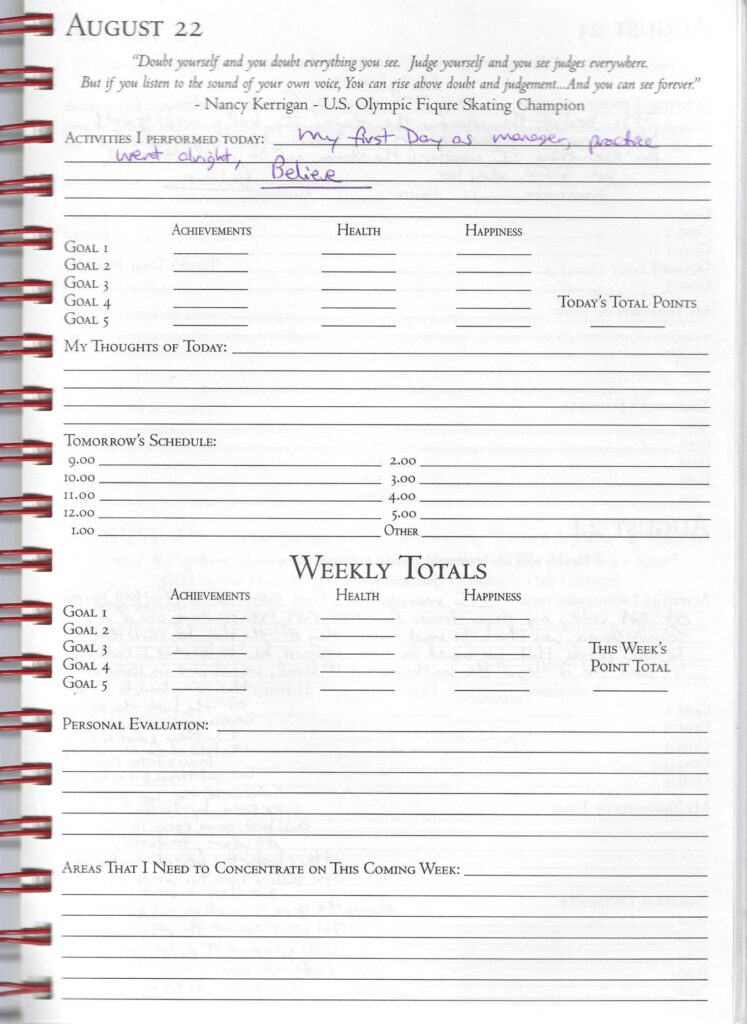
In fact, Smith has many hundreds of pages of Daily Journals that he wrote every detail in every day before and during his coaching, that he wrote in after practice sessions, and that he wrote in before and after matches.
At the bottom of every Journal page for a period of that full year he wrote BELIEVE in large capital letters at the bottom of his Journal writing Every Day and underlined it. For hundreds of days in a row he wrote BELIEVE at the bottom of every Journal entry.
He still has all those Journals now to show to anyone who would like to see them. Some pictures of these pages are included in this document.
Smith also wrote a motivational self-development book that was published seven months before he purchased the Soccer Club, and on the day he received the first copy of his book he wrote a motivating message, and he wrote BELIEVE at the top of the inside title page.
Throughout Smith’s coaching career in football and in soccer, he always coached with his very positive coaching style, and he always coached with his very positive-thinking personality that is portrayed by Ted Lasso.
In addition, throughout Smith’s entire coaching career in football and in soccer, he always coached with his BELIEVE philosophy that the Ted Lasso series portrayed throughout its four Lasso seasons.
Here are some examples of Smith’s BELIEVE philosophy and positive coaching style:
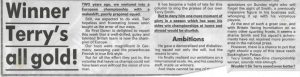
1) A national newspaper article in FIRST DOWN titled, “Winner Terry’s All Gold”, wrote about Smith coaching the Great Britain National Team in American football to the European championship, even though prior to Smith becoming the head coach, the Great Britain team had never in history won a single game of any kind in Europe.
This article by the FIRST DOWN newspaper editor writes, “So First Down is delighted to report this week that a well-drilled, gutsy and talented British team is now the champion of Europe. Our boys were magnificent in Germany, sweeping past the powerhouse Finnish in true Brit style. But for all the effort they put in, the victories that leave us champs could not have been won without the vision of one man. It has become a habit of late for this column to sing the praises of our own Terry Smith. But to deny him one more moment of glory in a season which has seen his sides win championships at home and abroad would be churlish. He gave a demoralized and disbelieving squad not only the will, but the means to win.”
This article points toward Smith taking over a demoralized Great Britain National Team that had never won a game in history and did not believe in themselves, and through his very positive coaching style being able to get his players to Believe in themselves so much that they won the European Nations Championship.
2) When Smith took over as head coach/manager of the English soccer team, prior to his arrival the team had lost all three of its league games and had not scored a single goal in any of those losses.
Smith’s first match as head coach/manager was in a nationwide Cup against a team that was two divisions higher in the Football League than Smith’s team.
But Smith’s team scored two goals in the first ten minutes that Smith was coaching, scored four goals in the match, and won through to the next round of the Cup to play Aston Villa.
The newspaper article by sports editor Ian Bedford titled, “Zero To Hero” writes about this win, “And Terry Smith may find his motivational book The Hero Inside Of You becoming a best seller if he can continue to inspire the City side to repeat Tuesday’s memorable aggregate Worthington Cup triumph at Vale Park.
The word ‘negative’ doesn’t appear in the 40-year-old American’s vocabulary and his aim for this weekend’s double-header at Torquay and at home to third division leaders Rochdale on Monday is simple. “We want to win both matches,” he said yesterday.”
This article shows how the media saw that Smith was never negative at any time, and how he was always very positive, just like the character Ted Lasso.
3) When Smith took over as head coach/manager of the English soccer team, his three captains were interviewed in a television documentary that is posted on YouTube titled, Chester City 1-1 Exeter City (1999).
In this video, his captains talk about the many pages long that the written Scouting Reports and Game Plans were that Smith would give to each of his players before every match.
Captain and central midfielder Nick Richardson said, “It’s pretty much what other managers would normally tell you or coach you, set down on paper as a reference point.”
Captain and striker Luke Beckett said, “It has in it the corners and free kicks, and has mental things telling you you’re going to win, and that you’re good players, and trying to get your confidence up. We always think we can win but it’s just converting thinking into doing it really, and hopefully we can do that.”
This video shows the very positive coaching style that Smith coached with, and what Luke is describing is turning thinking you can win into really Believing that you can and doing it.
Smith would handwrite the word “BELIEVE” in large letters on the front cover of every Scouting Report and every Game Plan for every match, and he would also handwrite the word “BELIEVE” in large capital letters at the end of the last page of every Scouting Report and every Game Plan because he wanted the word “BELIEVE” to be the last thought that his players had going into every match.
As the season progressed, his team won some matches and moved up in the standings, but Smith has always said that he did not do as well with his young players as he expected to do, or as well as he feels that he should have done.
Strangely, after Smith was announced as the manager, there was not a single time that a referee awarded a penalty kick for Smith’s team against their opponents in any of their matches that season, even when Smith’s players were blatantly tripped and taken down in the penalty box.
However, the referees called a large number of penalty kicks against Smith’s team, several of which were the difference in the games, including in a 1-0 loss to Premier League club Aston Villa.
Some of the other things Smith was criticized for because he was an American from a different sport, were his appointment of three captains, one in the defense, one in midfield, and one up front, the implementation of weight training, speed, and plyometrics training where he built a weight room and had the players begin weight training and plyometrics, the designing of complex set pieces on corner kicks and free kicks where he utilized his experience designing American football plays to design his well-planned set pieces, and the designing of more complex formations such as the 1-2-1-4-2 or the 1-2-4-1-2 that Smith most often used, in comparison to the English managers who almost all used a basic 4-4-2 formation during that time period.
Smith also signed many foreign players from other countries, as discussed earlier.
Smith initiated these innovative and previously not thought of ideas 25 years ago, but Smith was criticized for the ideas by the media because his background was as an American football coach.
However, there are many English and worldwide teams now who have begun appointing three captains, every English and worldwide Club now has an excellent weight training program, every English and worldwide team now spends a great deal of time designing and working on set pieces, English teams now have more foreign players in their teams than they have English players, and English teams as well as Worldwide teams now use far more complex formations like the 1-2-1-4-2 and the 1-2-4-1-2 formations that Smith was using.
Therefore, in several ways Smith was ahead of his time with ideas that almost all Clubs now implement.
He was criticized for these ideas 25 years ago because he was an American with an American football background, but many of the ideas he initiated are now being used by every English Club, including in the English Premier League.
His team did not do as well as he thinks he should have done in League matches, but his team did do extremely well in the Major Cup tournaments.
Smith found that his American football coaching background did not help him if he was watching a soccer game from the sideline. However, he found that his American football coaching background allowed him to be an excellent scout and analyzer of soccer games when he could sit up high in the stands on his scouting trips, because the films that American football coaches analyze of their opponents are always taken from high up in the press box.
Therefore, Smith was accustomed to analyzing games from that high vantage point.
English soccer teams did not exchange any game films in those days before games, and because all the clubs played their League matches on the same nights, then Smith did not have a chance to see any of his League opponents before the games his team played against them. As a result, he only saw their League opponents after the game had started and he was standing on the sideline.
However, Cup opponent teams often played their Cup matches on different nights, and Premier League clubs usually played on different nights than his team played.
Therefore, Smith had a chance to take advantage of his scouting strength from high up in the stands during Cup competitions and against Premier League opponents, which allowed him to scout his Cup opponents.
As a result, Smith’s team defeated Port Vale in the Worthington Cup, and then got to play Premier League club Aston Villa twice, home and away.
His team came very close to winning the first match against Aston Villa, with the score tied 0-0 late in the match before an unusual handball on a cross far away from the goal occurred against his team, resulting in a penalty kick that his excellent goalkeeper saved before Aston Villa scored on the rebound.
His team also made it to the 3rd Round of the FA Cup, the farthest the Club had gotten in many decades, and only the third time the Club had made it that far in the Club’s 114-year history.
Smith was able to scout their FA Cup opponent Manchester City, and he designed an excellent and very innovative game plan where he chose to play a formation with a sweeper and a 1-2-1-4-2 formation.
Manchester City’s central midfielder, Kevin Horlock, would always run from the central midfield into his offense’s attacking left corner to take a defender away from Manchester City’s Irish International wide left midfielder Mark Kennedy, and to create a triangle passing attack between Horlock, Kennedy, and the front left striker.
Manchester City had used this attacking strategy to score a division-leading number of goals.
All other Manchester City opponents in previous matches had defended Horlock with either their right fullback staying back to defend or their central midfielder tracking back into their own back right corner.
However, a primary weakness of these two defensive approaches was that neither of them allowed Kennedy to be double-teamed, which allowed Kennedy to put many crosses into the box.
An additional weakness in both of these defensive approaches was that when the teams won possession, then their players were back so far defensively that they had huge difficulties getting into an offensive counterattack.
As a result, the ball almost always stayed in Manchester City’s attacking half of the field because after the teams would win possession from Man City deep in their own half, then the teams would have limited counterattacking options, and so they would usually lose possession back in their own end for City to be right back attacking on offense again.
Manchester City was scoring a huge number of goals that season, and everything they did offensively was along their left side, based upon the passing triangle they created between Horlock in the corner, their excellent Irish International wide left midfielder, Mark Kennedy, and their striker to that side.
Smith’s innovative defensive game plan utilized a 1-2-1-4-2 against Man City’s 4-4-2, with Smith’s sweeper in the middle behind the two central defenders running over to defend Horlock in the back right corner, allowing his players to double-team Man City’s Kennedy in the wide left midfield with Smith’s right fullback and with his extra central midfielder that had not tracked back to cover Horlock in the corner.
This strategy completely neutralized Manchester City’s offense that always went through Kennedy.
Man City’s only goal did not even come on an offensive attack and was just a loose ball in the box.
Smith’s design also created an additional advantage on offense because it allowed Smith’s team, when they won the ball back, to have a counterattacking midfield advantage with an unmarked central midfielder who had not run back into the corner to defend Horlock like other teams had done.
As a result, on all counterattacks Smith’s team had a one attacking player advantage because Horlock was stuck way down in the opposite corner.
The result was that Smith’s unmarked central midfielder scored the goal for his team on one of these unmarked counterattacks that tied the match 1-1.
Smith’s team dominated the entire match and could have scored several more goals except that his team kept striking point-blank shots right at the Man City goalkeeper.
Smith’s team played a tremendous match, and the score was tied 1-1 late in the match until Manchester City scored with 11 minutes left when Smith’s underdog players just got a little tired.
As a result of the success Smith’s team had in many Cup Tournaments, his team was able to play extra Cup rounds and extra matches against major clubs, and so his Club was able to bring in far more revenue from these extra matches than the Club had ever brought in during past years.
This extra Cup revenue, along with Smith saving money by having very young players with low salaries, and along with Smith working and serving as head coach/manager, chief executive, and general manager without being paid anything for doing these three jobs, resulted in the Club saving enough money that Smith was able to pay off all the Club debts within the first half of his first season.
Paying off all the club debts more than two and a half years before it was required in the bankruptcy documents he had inherited.
In summary, then, Smith took over a team that was in last place, that had lost every game, and that had not scored a single goal, and he served as the head coach/manager of his very young team for 22 League matches and many additional cup matches in several different Cup Tournaments that included the FA Cup and the Worthington Cup.
Through hard work and the improvements that he made with the team and with the Club, he was able to get the team off the bottom of the League and above two other teams right before he hired a manager to replace himself.
In addition, Smith had great success in the Cups where his team got to the Second Round of the Worthington Cup and played Aston Villa twice, where his team got to the 3rd Round of the FA Cup for only the third time in the Club’s 114-year history and played Manchester City, where his Club made enough profit in the months he was the head coach by developing inexperienced young players, by Smith serving for free as the head coach/manager, chief executive, and general manager without being paid, and by hugely increasing revenue with all the Cup successes, so that the Club was completely out of debt for the first time in 100 years.
As a result, after paying off all the debts and getting the Club out of debt, and after he had just signed the career record goal scorer for the Trinidad and Tobago National Team, a player who had scored a goal in his first match playing for Smith that moved his team up in the standings ahead of other teams, and with half the League season still remaining, Smith chose to step down and hire a manager to replace himself.
He hired a manager who was available in mid-season because that manager had been fired by his previous club.
Smith moved over to become an assistant coach where he coached the goalkeepers every day for the entire second half of the season.
With the Club out of debt for the first time and doing well financially, Smith doubled the team salary cap and allowed 12 new English veteran players to be signed to the team, giving the team a great chance to have success in the second half of the season.
The next season, Smith was an assistant coach for all the Cup tournaments. His responsibility was to scout all Cup opponents, and he designed all the set pieces offensively and defensively for all the team’s Cup matches.
In this second season, his team again did tremendously well in the Cup Tournaments, just like his team did the year before, making it to the 3rd Round of the FA Cup again, this time almost defeating major club Blackburn Rovers when his team scored with 15 minutes left on a corner kick he had personally designed to take the lead 1-0. However, the referee disallowed the goal for a push that no one else saw and did not appear to actually occur.
His team also made it to the National Semi-Final in the FA Trophy, which like the FA Cup is a tournament that every Club in England participates in. During this route to the Semi-Final, his team scored on many Smith-designed set pieces as they defeated six opponents.
In addition, his team won the Nationwide Cup Championship by defeating five opponents, which was the first Cup Championship that the Club had won in 40 years.
The Ted Lasso creators, writers, and actors intensively researched these experiences that Smith had initiated, and the Lasso writers wrote many nearly identical and similar storylines, including utilizing the BELIEVE word and motivating philosophy that was the most important central theme of the Ted Lasso series.
Some examples of things that Terry Smith did while coaching his soccer team that the Ted Lasso series has had the exact same or very similar storylines are:
1) – Terry Smith is an American whose background was as an American Football Head Coach and Player/Head Coach, and he switched from American Football to coaching professional Soccer in England, even though he had no previous background or knowledge about Soccer.
– Ted Lasso is an American whose background was as an American Football Head Coach, and he switched from American Football to coaching professional Soccer in England, even though he had no previous background or knowledge about Soccer.
2) – Terry Smith became the first American in history to be the Head Coach/Manager of an English or European professional Soccer team, and the first American in history to Coach in the FA Cup, which is the biggest and most famous soccer tournament in the world.
– Ted Lasso is the first American in history to be the Head Coach/Manager of an English or European professional Soccer team, and the first American in history to Coach in the FA Cup.
3) – Terry Smith, as an American Football Head Coach and Player/Head Coach, coached his teams to winning five National Championships and European Championships in England before switching to coach Soccer.
– Ted Lasso, as an American Football Head Coach, had coached his team to win a National Championship before switching to coach Soccer.
4) – Smith built his National Championship team from a team that had been in last place before he arrived, with Smith taking his Spartans team to a perfect 14-0 in his first season.
– Likewise, in the Ted Lasso show, they say that Lasso “took a garbage team to the National Championship in his first season”, which is stating an achievement similar to what Smith did by taking the last place team to a perfect 14-0 record in his first season.
5) – The Manchester Evening News newspaper, which is the largest newspaper in Manchester and one of the largest papers in Great Britain, wrote a feature story about Terry Smith in December 1999, after Smith’s team played excellently in the 3rd Round of the FA Cup against Manchester City. The article was titled FOCUS ON CHESTER’S SAVIOUR, A YANK OF ALL TRADES, written by Paul Hince. In this article, Hince referred to Smith as a very tough western cowboy sheriff when he wrote, “For a good half an hour before the start of the match Terry walked around like a US Marshall inspecting his defenses before the outlaws hit town. Smith looked in a world of his own. So much so that he seemed oblivious to the fact that it was raining cats and dogs. The softie management team from Maine Road were dressed for an expedition to the North Pole. Not Teflon Terry. He stood on the touchline for the entire 90 minutes wearing a blazer and slacks. Want to bet his forefathers helped tame the Wild West?”
– It is logical that the creators, writers, and actors of Ted Lasso read this article in their research because there are storylines from Ted Lasso that match up with this article, and the creators made the Ted Lasso character a western cowboy, just like Smith is described in this article.
– Throughout the Ted Lasso series, Lasso is referred to many times as a cowboy from the West.
– Lasso also says Howdy y’all and Howdy partner, which are western phrases, and Lasso is called a cowboy by many of the characters on the Lasso show.
– In addition, the last name Lasso is a western term that refers to a cowboy rope, which further develops the character just like Smith was described in this article.
– The first name Ted is as close to the name of Terry, or Ter for short, as it can possibly be.
– As a result, the entire western cowboy persona of the Ted Lasso character appears to have come from this article about Smith in a major English newspaper.
6) The phrase that Smith always said when he saw someone or met people was , “How y’all doin?”, and Smith always said this very enthusiastically and very uniquely.
This phrase was such a trademark of Smith that the hour-long national television documentary shown in Great Britain, and that is still available online, opens with the first words of the entire documentary being Smith saying, “How y’all doin?”
In fact, the television documentary producers thought it was such a unique trademark of Smith that it has Smith saying this phrase while the title page is still showing, before the camera cuts to Smith talking with someone.
There is also a second time in the documentary that the producers show Smith saying, “How you doin?” on the documentary when Smith meets someone.
Likewise, this same exact phrase is said by Ted Lasso many times throughout the Ted Lasso series, with Lasso saying this phrase every time in the same exact enthusiastic and unique way that Smith always said it, making it appear that Lasso copied this phrase and the way of saying it from Smith.
7) – Terry Smith used the one-word motivational phrase BELIEVE in his own life, and prior to him purchasing the Chester soccer club he wrote BELIEVE every day for many hundreds of days in his Daily Journal. He wrote his Daily Journal every night, and at the end of it he would write the one word BELIEVE and underline it as a motivation to himself.
He also wrote a motivational book that was published seven months before he purchased the soccer club that was sold throughout Europe. The title of his book was, The HERO INSIDE OF YOU, Your Daily Guide To How To Make This The Best Year Of Your Life.
His book is a motivational book that is designed for readers to Create a Plan for their Lives, for readers to set Goals for their Lives, and then for readers to enjoy working through a Daily Goal-Achieving System that Smith had created and developed since he was in college.
On the inside Title Page of the first copy of his book, Smith wrote a motivational paragraph, and at the very top of this Title Page he wrote BELIEVE and underlined it.
This was all seven months before he purchased the soccer club.
There are many pages throughout his book that Smith wrote about his BELIEVE philosophy, and he included many quotations he had said and written through the years, all of which discussed and explained his BELIEVE philosophy.
On the dedication inside the title page Smith wrote, “I would like to Dedicate this Book to Each Person who is Totally Committed to making His or Her Life, and the Lives of their Loved Ones, Better, Happier, and More Successful. Your Commitment Will Be Rewarded. I Promise You.”
Smith wrote in his book every Day for the seven months leading up to his purchase of the soccer club, and for all these 200-plus Days he ended his Daily Journal writings in his book by writing the word BELIEVE and underlining it.
In addition, he wrote BELIEVE and underlined it on every Day in the Journal as his purchase of the Soccer Club got closer, he wrote BELIEVE on the Day his purchase of the Club was being finalized, and on the Day that his purchase was finalized.
He also wrote BELIEVE on the Day he took over the Club as owner, chairman, and general manager.
In addition, he wrote BELIEVE on all the Days that he became head coach/manager and began coaching the soccer team, and he wrote BELIEVE on the Days that he coached his games as manager, including on the Day of his first match where his team scored 4 goals and won through to the next round of a Major Cup to play Aston Villa.
Smith’s first match as manager was called by the media journalists the most exciting match that the media and fans had seen in 20 years and possibly forever, and following this first match Smith wrote the word BELIEVE and underlined it in his journal after the match.
In addition, Smith personally wrote a seven-page Scouting Report and Game Plan for every match he was the manager of, he personally made a copy for every player on the team, and he placed copies of them in front of each player’s dressing area and all around the dressing room before every match.
On the front-page of every one of these Scouting Reports and Game Plans for every game, he had a cover page that he handwrote the word BELIEVE on in large writing.
There is a television documentary posted on YouTube and titled, Chester City 1-1 Exeter City (1999). that is still available online where part of it interviews the team’s three main players about Smith’s scouting reports and game plans.
The players say in the televised interviews that Smith writes the same tactical and strategic things on the game plans that other English coaches speak verbally to the players but do not write down, and that Smith puts his match tactics and strategies in writing as a reference point.
The players also say that Smith writes many motivational things on his scouting reports and game plans.
One team captain is quoted as saying in the documentary that what Smith writes includes “Telling you that you are going to win, and telling you that you are good players, and trying to get our confidence up. We always think we can win but it is just converting thinking it into really doing it, and we can do that.”
This quote by the team’s captain and star striker describes what the word BELIEVE means.
The creators, writers, and actors of Ted Lasso, who put the philosophy BELIEVE into the Ted Lasso shows, will have seen this television interview about Smith, a video that is still available online, before and as they began writing the Ted Lasso shows.
In addition, Smith made a sign for the dressing room wall that within it had a design often seen on fundraising posters for charities, where the design is colored in as the charity gets closer to reaching its target at the top.
Smith designed his sign so that the design represented the number of points that his team would earn from wins as the season went on.
At the top of this sign, Smith wrote BELIEVE, and Smith personally taped this sign to the home dressing room wall before every match.
Smith even brought the sign with the team to away matches where he personally taped it onto the wall of his team’s away dressing rooms.
Smith also spoke about BELIEVE and BELIEF in many of his speeches to the players and to the team in the dressing room before and after matches, and on the practice field and in the dressing room before and after practices.
• The Ted Lasso shows and the entire Ted Lasso series is based around the BELIEVE sign that Lasso tapes up on the dressing room wall on his first day as manager, and the entire Lasso series is based on the BELIEVE concept and philosophy that Lasso speaks about often.
• Throughout the entire Ted Lasso series, from the first show when Lasso puts the BELIEVE sign up on the dressing room wall until the final scenes of the final episode, the BELIEVE sign and the BELIEVE theme and concept are included as a very main part of the storylines in most of the Lasso shows.
• There are many more storylines that include the BELIEVE sign and philosophy, but some of these storylines include:
• Lasso taping BELIEVE on the wall in the first episode when he arrives to coach the team.
• The players and coaches touching the BELIEVE sign before matches and on special occasions.
• Lasso showing his assistant coach that BELIEVE is his personal philosophy and that Lasso keeps BELIEVE signs in places all around his house so he can see them in every room that he is in.
• The temporary villain, Nate, tearing down the BELIEVE sign and ripping it in half after a match when he gets mad at Lasso.
• The sign being taped back together by Lasso, and then taped back up onto the wall by Lasso without the players knowing.
• Several episodes showing the videotape to the players and coaches of Nate tearing down the BELIEVE sign and ripping it in half.
• At halftime of a match that the team is losing, team owner Rebecca Welton talks to Lasso in the stadium hallway outside of the dressing room, where she twice says to Lasso, “I Believe in you.”
• Lasso giving a game speech to motivate his players by asking them, Do you “Believe in Miracles?” And speaking about how he Believes in Hope, and he Believes in Belief, and he Believes in Miracles.
• The BELIEVE sign falling down off the wall during a key match in front of the players, revealing that it is ripped, and Lasso ripping up the sign into smaller pieces while he is giving a speech about Belief not just being a sign on the wall but the Belief that you have inside of yourself.
• Lasso giving the speech where he uses the word Believe or Belief six times in the speech.
• The players, unknowingly to Lasso, each taking a small piece of the ripped up BELIEVE sign and keeping it in their locker, or keeping it in their uniform shin guards and captain’s armband during every match they play.
• In the final match of the season and of the series, when they are losing 2-0 at halftime in a match they have to win to have a chance of winning the Premier League championship, at halftime when their chances of victory seem very slim and all of the players get their small pieces of the BELIEVE sign out of their lockers and out of their uniforms to lay the pieces on the table in the middle of the dressing room.
• The players fit all the many pieces together like a jigsaw puzzle to re-form the BELIEVE sign like the sign had originally been before it was torn up, inspiring the team to come from 2-0 behind to win the match 3-2.
• After this final match in the final episode of the Ted Lasso series, Ted Lasso stands in the dressing room with Nathan at night after this last match. By habit, Lasso turns to look up toward where the BELIEVE sign had originally been on the wall, but seeing a blank wall because it is not there, Lasso says, “When I look up there, I still see it, is that weird?” And Nathan says, “No, it’s lovely.”
• At the end of the final episode as the Ted Lasso series ends, and Lasso returns to America, in the final scene of the series, all the assistant coaches that Lasso had worked with and mentored are standing in the dressing room and smiling as they look up at the BELIEVE sign that they have put back together and taped back onto the wall where Lasso had originally put it.
• In summary, then, the main theme throughout the Ted Lasso series was based upon the concept of BELIEVE, and this concept represents exactly what Smith did both before he purchased the soccer club in his own personal life, what he included in his book that he wrote and was published seven months before he purchased the soccer club, what he did the entire time during and while he owned the club and while he was coaching and managing the team, what he always did to get the players to BELIEVE in themselves and in each other, and what he has done ever since he was coaching the soccer team in the many careers that he has had since then.
• This BELIEVE theme that Smith started and Ted Lasso picked up on has become a rallying call and motivator for hundreds of millions of people across America and around the world. People from all walks of Life have been using BELIEVE as a motivator for themselves, for their families, for their teams, and for their businesses, including head coaches from college and professional sports, politicians, corporate leaders, teachers, professors, fathers and mothers, etc., etc.
• Since this BELIEVE theme has become inspiring and motivating to so many people, then BELIEVE is being used in many books, posters, writings, and motivating signs in coaches’ offices and team locker rooms.
• This BELIEVE theme and sign was used in the Santa Claus commercials for the FIFA World Cup television broadcasts on the Fox Television Network.
• This BELIEVE theme and sign is being used in many ways commercially on a very large amount of clothing, in famous games like Monopoly, and on DOVE products for men.
– While with the soccer club in England, Smith’s coaching philosophy was built around trying to get his players to BELIEVE in themselves and to BELIEVE in each other.
– There is even an article that was and still is available online for the Lasso creators, writers, and actors, where Smith is quoted as saying, “Getting to the First Division in three years is not a promise. It’s a goal. There’s not much difference between being a Third and a First Division team. In every area of Life you pretty much become what you Believe you can become. And if I have to stand up and say we’ll be in the First Division in three years and get people to Believe it, then to me that’s what has to be done.”
– Likewise, on the final page of the book that Smith wrote in 1998 and was published a few months before he purchased the English soccer club, Smith included a Blessing that he wrote for the readers of his book. The Blessing that Smith wrote in his book is:
“May the road rise to meet you,
and on the occasions when it does not then may you enjoy the physical challenge
of marching forward under only your own strength and power,
May the wind be always at your back,
and if it is not then may you get great pleasure at having the feel of the wind in your face,
blowing back your hair, as you seize the opportunity of advancing into it,
May the sun shine warm upon your face,
and may you choose to feel the sun on your face
even when the rest of the world wants to see only the clouds,
May the rain fall soft upon your fields,
and if there is a drought or there are heavy storms that destroy your harvest,
then may you Smile inside yourself
in the Eternal BELIEF that nothing, absolutely nothing, can stop you
from reaching your chosen Destiny,
And until We meet again,
May God hold You in the palm of His hand.” – Terry Smith
Smith also wrote in his book in 1998,
“The reason that practice makes perfect is because by practicing something we will occasionally, by chance, do it successfully. As a result of this success, we will then Believe that we can do it, and so we will begin to do it successfully more often. Perfection is thus achieved through a gradual process of increasing Belief, just like going up a flight of stairs one step at a time. In reality, therefore, practice actually leads to Belief, and Belief leads to perfection. The Belief is the key factor. Thus, the stronger, deeper, and more committed we BELIEVE, the faster we will reach our intended Goals. Make yourself really BELIEVE that you can, and you can do anything.”
Sounds a whole lot like Ted Lasso.
– Throughout the 25 years since Smith coached soccer in England, Smith has continued to write BELIEVE in his journal and follow his BELIEVE philosophy for these many years.
Everything that Smith has done for many decades, both before he coached soccer in England and after he coached soccer in England, is just like the positive-thinking and BELIEVING Ted Lasso.
Written by Terry Smith in his book on his first day as the manager of Chester in 1999.
In addition, Smith utilized his BELIEVE philosophy in England before and during the time he coached soccer in England, including in the quote from the Guardian national newspaper where he talks about getting people to BELIEVE, and about getting people to realize that they can become what they BELIEVE they can become, including in the entire motivational and Goal-Setting book that Smith wrote that was published throughout England and Europe seven months before he purchased the soccer team, utilizing the word BELIEVE that he wrote in the dedication on the front page of the book, during the seven times he wrote BELIEVE in just the one above quote from his book, on the hundreds of straight days that Smith wrote BELIEVE at the bottom of every daily journal page before, during, and after he owned and coached the soccer team, including writing BELIEVE in his daily journal every day after he returned to America, including all the times that Smith wrote BELIEVE on the scouting reports and game plans that he gave to the players for every match, including the signs that Smith wrote BELIEVE on and put up on the walls in the dressing rooms and stadiums, including the many times that Smith gave speeches to his soccer team and football team players where he spoke with them about his BELIEVE philosophy, including the above Blessing about Eternal BELIEF that Smith wrote in his book, and every playing position, coaching position, teaching position, league president position, job, television station, or business that Smith has ever had before and after when he was coaching soccer, all look and sound a whole lot like the positive-thinking and BELIEVING Ted Lasso.
And so, the logical explanation is that Apple Magazine was correct when they wrote in 2021 following Ted Lasso’s first season that Ted Lasso was based on and inspired by Terry Smith.
Not only was the personality of the character Ted Lasso just like Smith, but the storylines and the themes of the Ted Lasso Shows and Series are very often the same or similar to what Smith did while he was coaching the English soccer team.
Here are some of these many storylines and themes from Smith’s actions and experiences while he was coaching soccer in England that have exact or similar storylines and themes in Ted Lasso shows:
8) – Terry Smith often went to visit elementary schools while he was coaching the Soccer team, which was totally unique in England because no other soccer coaches and teams did this.
At the schools, Smith would begin by talking with the students who were seated in a large school room.
He then would go outside with the children into the play area that was paved with asphalt, where he and the players he had brought to the school with him would play and teach the children soccer skills.
When they were done playing, then the children lined up, and one-by-one came up to speak to Smith, who personally gave each of the children a free ticket to whichever soccer game they would like to attend.
There are major television networks that did hour-long documentaries on Smith, where they filmed and televised Smith during his visits to these schools.
One of these documentaries by Granada ITV Television, which is one of the two major networks in Great Britain along with the BBC, is still available online that includes two documentary segments of Smith visiting two of these schools on different days.
This documentary includes all the above-mentioned parts of Smith’s visits.
The Lasso creators, writers, and actors spoke about this Smith documentary in media interviews before and during the first season of Ted Lasso. Therefore, the Lasso creators, writers, and actors knew about and watched this documentary about Smith.
Ted Lasso, in Episode 3 of Season 1, had this same Smith storyline of school visits and had Ted Lasso visit a school, where Lasso did exactly what Smith had done, and even in the same order.
Lasso spoke to the students who were seated in a large school room. Lasso said “How y’all doing?” to the children, exactly like Smith would start by saying.
Lasso then went outside into the play area that was paved with asphalt, where he and the players he had brought to the school with him, played and taught the children soccer skills.
Exactly like the documentaries show Smith doing.
We would expect the Lasso show to be coaching soccer skills to the schoolchildren on a grass field, but the Lasso show has them teaching the children on an asphalt area, exactly like Smith did in the documentary.
The fact that asphalt was unusually written into the script instead of grass further supports the storyline being taken from what Smith had done in real life.
Then, Smith gave a free game ticket to each child, while Lasso gives a signed soccer ball to a child.
At the end of the Lasso scene, the principal says to Lasso that the school has never had someone stay so long with the children at the school as he had stayed.
And that is exactly what was said to Smith by the schools he went to because Smith would stay talking with and playing with the children for a long time, and no English soccer coach had ever come to their schools like Smith was visiting and coaching the schools throughout the entire city and area.
The Lasso show was so exact to what Smith had done at the schools that the Lasso show even had a scene where Lasso got hurt by getting hit in the nose with a ball that a child had returned toward him during the coaching session practicing.
Likewise, the Granada television documentary on Smith includes an almost identical scene where one of the players that came with Smith to the school was hurt by a kicked ball from one of the children during the coaching session practice.
9) – Smith became famous for the soccer set pieces he designed, such as corner kicks and free kicks, that he designed and changed for every match based upon the opportunities and weaknesses that he saw in how each opponent lined-up.
Set pieces that he created from the scouting trips that he traveled on to personally watch every Cup opponent.
At that time in English soccer, the other English coaches and managers did not spend time on set pieces, and they did not design or practice specific set pieces because they considered the entire game of soccer to be a fluid game, including even the set pieces.
The English coaches at the time just allowed their players to ad lib on set pieces with whatever the players wanted to do.
Today, the English coaches have changed, and they now work very hard on designed set pieces, but back then Smith was the only coach working this hard to design set pieces.
The media, players, and fans saw the work that Smith was doing on set pieces, and many newspaper and magazine articles were written about Smith’s set pieces that are still online for the Ted Lasso people to read and copy this set piece storyline from.
When discussing these set pieces with the media, Smith would say that as an American football coach he had a disadvantage in most areas of coaching soccer compared to other soccer coaches because the soccer coaches had grown up with the game.
But Smith said he had an advantage over the English coaches on set pieces because a soccer set piece begins from a stopped position just like every American football play begins from a stopped position.
Smith said that a soccer set piece, just like an American football play, has the opportunity to put all the players in a specific place on the field during a stoppage of play before the play begins.
Smith said to the media that a set piece has the opportunity to take advantage of the defense by doing a specific action in coordination with their teammates during the set piece, just like every American football play has the coach putting all the players in a specific place on the field to take advantage of the defense by doing a specific action in coordination with their teammates.
Many of the goals that Smith’s team scored during their many Cup successes were from the set pieces that Smith designed.
Smith told the media and many people that his disadvantage of being an American football coach in the game of soccer was also an advantage in other ways because as an American football coach he saw the soccer game differently than all the English coaches, and so his background as an American football coach was a big advantage for him on set pieces.
Smith said that within every disadvantage is an advantage if you look hard enough for it.
In Episode 10 of Season 1, Lasso’s team was playing Manchester City in the final match of the season, and his team had to win to keep from being relegated.
Lasso was somewhat discouraged because he knew that Manchester City would be very difficult to beat.
Lasso went into the team owner’s office, where the club owner, Rebecca Welton, told Lasso exactly what Smith had always said, that Lasso’s background in American football was a disadvantage in some ways, but also an advantage in other ways because Lasso saw the game differently than any of the English soccer coaches.
In this episode, Lasso was inspired to take advantage of his American football background to design an assortment of creative set pieces that his team practiced all week on, exactly as Smith had done.
In that match against Manchester City, Lasso’s team was losing 1-0 when he called one of the set pieces that was designed exactly like an American football play, and his team scored to tie the game 1-1.
Therefore, this Ted Lasso episode about set pieces was exactly the same as what Smith had done in real life.
Lasso designed the set pieces just like Smith had become famous for.
In addition, just like Smith had said and done in real life, Lasso said that having an American football background instead of a soccer background caused disadvantages for him, but that it also provided advantages for him in some ways because he saw the game of soccer differently than all the English coaches, such as with set pieces.
Lasso and team owner Welton said exactly what Smith had said, which was that within every disadvantage there is an advantage if you look hard enough for it.
10) – When Smith purchased the soccer club, he heard that the players were not happy with the dressing room showers because a couple of the showers did not have much water pressure.
Since Smith wanted to show his respect for his players, then on his first weekend at the Club he and two supporters fixed the showers so they had more water pressure. At the same time, he cut artificial turf and installed it on the entire dressing room floor.
This work that Smith and the two supporters did was written about in the newspapers for the Ted Lasso creators and writers to read.
In the second episode of Season 1 of Ted Lasso, which is the second Lasso show ever made, the storyline revolved around the shower pressure in the dressing room and Lasso getting it fixed for the players.
Having the second-ever episode of a show being about fixing shower pressure in the dressing room is a very unusual and unexciting storyline for a new show, and this brings about the question of why any creator and writer of a show would think of something that is so unexciting, and especially why would they include it in the show’s second-ever episode.
Therefore, the logical explanation is that the Lasso creators, writers, and actors included such an unusual storyline at the very beginning of their series because it is what Smith had done at the very beginning when he began with his Club, which indicates that the Ted Lasso creators and writers were taking their storylines from what Smith did.
11) – The biggest match of Smith’s coaching period was his team’s 3rd Round of the FA Cup match against Manchester City. His team played exceptionally well, and the score was tied 1-1 until there were only eleven minutes left in the match.
Likewise, in Ted Lasso, all the big and most important matches that Lasso’s team played against were against Manchester City. This included the relegation match in the last episode of Season 1, where Lasso’s Richmond had to play Manchester City, and if they lost the match then they would be relegated.
The scoring sequence of the Lasso match was exactly the same as Smith’s match, with Manchester City scoring first, Lasso’s and Smith’s team scoring to equalize at 1-1, and then Manchester City scoring a very late goal to win.
Likewise, in Ted Lasso, they played the FA Cup Semi-Final against Manchester City, just like Smith’s team lost in the FA Cup to Manchester City.
12) In addition, Lasso’s team lost by the same score that Smith’s team lost to Aston Villa in a match in the Worthington Cup.
13) – The stadium for the Soccer Club that Smith coached in was thought to be haunted. There were many stories told by stadium groundskeepers, night security guards, and office workers of them seeing and hearing threatening dark person figures moving around the stadium and inside the clubhouse and offices at night.
The facts were that the stadium had been built where there had previously been a hospital decades before.
Ted Lasso, in Episode 6 of Season 1, had a storyline throughout this episode where their treatment room in the stadium was haunted because the stadium was built where there had been a hospital during the war.
14) – Smith brought in a sports psychologist for one day to speak to the team with a positive-thinking attitude technique similar to what the famous motivator Tony Robbins did during that time period.
Ted Lasso also brought in a sports psychologist in Episode 1 of Season 2 to speak with and motivate his players.
15) – Smith had a feature article written about him by the Manchester Evening News following his team’s excellent match versus Manchester City in the 3rd Round of the FA Cup.
The Manchester Evening News writer, Paul Hince, intended to write a negative article about Smith, but in his interview with Smith he found that he liked Smith, and so he wrote many positive things about Smith.
Hince wrote about how tough Smith was to be standing in his blazer and slacks for hours in the rain and the cold, in comparison to the “softie management team from Manchester City who were dressed for an expedition to the North Pole”.
Hince also compared Smith to a tough US Marshall and wrote, “Want to bet his (Smith’s) forefathers helped to tame the Wild West.”
Hince also referred to Smith as a very tough western cowboy sheriff when he wrote, “For a good half an hour before the start of the match Terry walked around “like a US Marshall inspecting his defenses before the outlaws hit town”.
The Ted Lasso creators appear to have paid attention to these western descriptions of Smith because they made the Ted Lasso character a cowboy from Kansas.
Hince also wrote that Smith was “charming”, that Smith works very hard and does so many jobs for the Club, including the low-level, time-consuming, and unappreciated jobs that other people do not want to do, and that Smith showed a lot of caring toward his players about their feelings and emotions.
Likewise, in Ted Lasso, in Episode 3 of Season 1, Lasso is set up with a newspaper writer who intends to write a negative article about Lasso, just like what had happened to Smith.
However, just like how the writer ended up liking Smith and calling Smith “charming”, the writer in the Ted Lasso show ends up liking Lasso, and he writes positive things about him.
In addition, in the final lines of the real article about Smith, Hince writes, “But Smith knows what he wants for Chester City Football Club. And for those who like to see a smile on the face of soccer, it might be good for the game if he does.” – End of Article
Likewise, the final lines of the article written in Ted Lasso says, “And though I believe Ted Lasso will fail here and Richmond will suffer the embarrassment of relegation, I won’t gloat when it happens because I can’t help but root for him.” – End of Article
Therefore, both of these final lines of the real article about Smith and the Lasso article are saying the exact same thing because they are saying that the writer supports Smith and the writer supports Lasso.
The words “rooting for” mean the same hoping for success for Lasso that the final words of the article about hoping for success for Smith do.
The article about Lasso could end in an infinite number of ways, just like any article can end in an infinite number of ways. Therefore, for the Lasso article to end with a final line that is saying the exact same thing as the final line of the article about Smith, then the odds are one in a billion that both articles would end in the exact same way out of the infinite number of ways that the two articles could have ended.
In addition, the writers of Lasso chose Ted as their name, which is very close to Terry, and the last name Lasso is a western term for a rope that matches the description of the way the Manchester Evening News writer described Smith in the article.
As a result, the logical explanation would be that the creators and writers of Ted Lasso took this newspaper storyline from Terry Smith and the article written about Smith.
The Ted Lasso writers and actors also appear to have taken Lasso’s entire western personality and name from this Manchester Evening News article about Smith.
To add one more similarity between the two articles, the article about Smith was written by Paul Hince, and the article about Lasso was written by Trent Crimm. These are not exact names, but Hince and Crimm are very similar to each other in style.
In addition, far less than 10% of people have names that are one-syllable words for both the first name and the last name.
In fact, in all the 30-plus characters in Ted Lasso, this writer, Trent Crimm, is the only character who has both a one-syllable first name and one-syllable last name, just like the writer, Paul Hince has that wrote the article about Smith, and that the newspaper storyline in Lasso appears to copy.
Therefore, the names of the writers being so similar and having all one-syllable names is less than a 10% chance, and so this further adds to the likelihood that the Lasso article storyline was taken from the Smith article.
16) – Also shown in this Manchester Evening News article, and in the London newspaper article here, is the fact that Terry Smith always stood up on the touchline throughout every match, whereas other soccer managers sit in the team bench dugouts, or stand inside the dugouts, or even sit a few rows back in the stands.
However, Ted Lasso also always stands on the touchline throughout every match.
London newspaper article from December 1999.
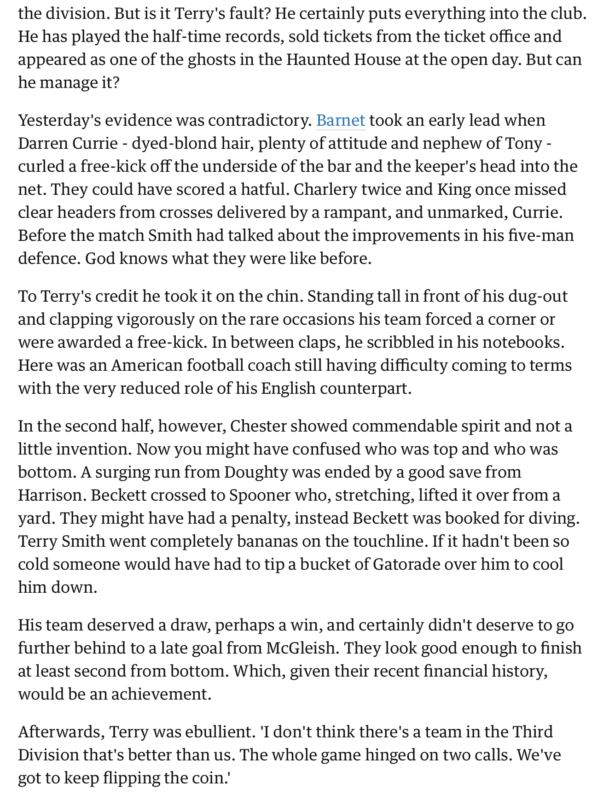
17) Smith’s team wore Blue home uniforms with a Gold logo, and his team wore Gold uniforms with a blue logo for away matches.
Ted Lasso’s team colors were also Blue and Gold, and the BELIEVE sign that Lasso made for the dressing room wall was also made in Blue and Gold.
18) – While Smith was coaching, he used more intricate player formations than the other English managers did at the time because of his American football background that has very intricate formations.
One of his favorite formations was to put an extra striker behind the two strikers up front in a 1-2-4-1-2, creating a position in between the midfield and the strikers that was difficult for opponents to defend in the 4-4-2 formation that almost every English team was running during that time period.
Smith especially liked to run this formation after he signed Angus Eve, who was the career leader in goals scored for the Trinidad and Tobago National team, because Eve had such tremendous playing skills that he was perfect in this position.
In Season 3 of Ted Lasso, the creators and writers switched to this same exact formation as Smith utilized, referring to this favorite formation of Smith as a False 9 formation.
19) – Smith always said that he found coaching soccer difficult because a soccer coach does not have the same control as an American football coach does about what is happening with his players on the field.
Articles were written in the media about Smith struggling with having less control during matches than American football coaches have.
Ted Lasso said exactly the same thing, that soccer coaching is not like football because a soccer coach has a lot less control, and once the game gets going he cannot tell players what to do.
20) – Smith used and still uses his BELIEVE motivation in his own personal life, writing it every Day for many hundreds of days in his Daily Journal before, during, and after his English soccer coaching period, writing it in his Daily Journals since he has returned to the United States, and writing it in the dedication of his book written before his English soccer coaching, in his scouting reports he gives to every player for every match, in his game plans he gives to every player for every match, and on signs he tapes onto the dressing room walls.
In Episode 10 of Season 1, just like Smith, the Lasso storyline has Lasso showing that he uses the BELIEVE motivation in his own personal life.
In this episode, when Lasso wants to prove something to his assistant coach, then Lasso goes around his own apartment to pick up BELIEVE notes that he has written and put up everywhere for him to see and be motivated by, such as in his bathroom and bedroom.
Lasso brings these smaller BELIEVE signs he has written for himself back to the living room to show his assistant coach how committed he is to this BELIEVE philosophy.
21) – Smith brought his personal BELIEVE philosophy to share with his team while he was coaching.
In the exact same way, Lasso brought his personal BELIEVE philosophy to share with his team while he was coaching.
22) – Smith’s team defeated Port Vale in the Worthington Cup, and Lasso’s team defeated Port Vale in a Cup.
23) – Smith decorated the stadium for Halloween for the benefit of the community. He made a big, haunted house in all the offices and social rooms inside the stadium. He invited all the children in the city and area to come to the Halloween party and haunted house for free, and he even took part in the haunted house as a character for when the children walked through.
In Ted Lasso, they did a similar storyline for a holiday, bringing Christmas presents to children, and singing Christmas carols.
24) – The Smith team and the Lasso team were both relegated to a lower division in the final match on a goal right near the end of the match of their first season. Smith was not the head coach/manager at this time, but he was the owner and the goalkeeper coach.
And both Smith’s team and Lasso’s team were able to secure promotion back up to the original higher division in the following years.
25) – There was a national tabloid newspaper from London that is known for writing false stories, who telephoned Smith after the first two matches Smith was the manager for had resulted in success for his team.
A writer thinking he was having fun made up some ridiculous questions about soccer rules that were not even rules because they would be impossible to have as rules. Such as having limits on the number of throw-ins which would cause a match to have to stop being played if the ball could not be thrown back in, and additional false questions about a retired player who had previously played for the national team. The writer began asking Smith these questions.
Smith was very polite to the writer because he has good manners and always tries to treat people kindly, but he knew that the writer was just trying to cause Smith problems, and so he politely got off the phone.
However, the writer then wrote a made-up story about Smith thinking these rules were real, and thinking that a retired player had played for Scotland instead of England.
The article was false, and the player was someone who Smith knew personally and had coached with, and so the article was made up.
However, readers assumed it was true, and so they would sometimes refer to the same false things in future articles.
The Ted Lasso Show has this same storyline because they have a press conference where the writers ask Lasso legitimate soccer rules, and Lasso does not know any of the answers.
The writers also ask Lasso about what teams certain players played for, and Lasso does not know.
26) – During Smith and his team’s battle to win and avoid relegation, the theme song from “The Great Escape” movie was played in the dressing room at every match for several weeks as the Smith team battled against relegation, and this Great Escape song was also constantly played on the television documentary about Smith and his team.
Likewise, the Ted Lasso show played this same Great Escape song as they were battling against relegation throughout the first Season.
27) – Both Clubs were more than 100 years old, with Smith’s Club being founded in 1885, and Lasso’s Club being founded in 1897.
28) – Smith wrote and gave Scouting Reports and Game Plans to his players before every match that included many things he wrote to motivate and inspire his players with.
English soccer coaches did not give these written scouting reports and game plans to players, and so Smith was the only coach in England doing this.
Likewise, Lasso also gave Scouting Reports to his players because he said to Roy Kent that Roy did not read the Scouting Reports he gave to Kent.
And Lasso also gave books to his players that were intended to motivate the players, just like Smith had been trying to motivate his players with the long Scouting Reports and Game Plans he wrote that Smith’s players referred to and compared to books in online documentaries that were and still are available for the Lasso writers and actors to watch.
29) – Smith had arranged to sell part of his Club to the fans, and after he left then the Club became owned by the fans.
Likewise, team owner Rebecca Welton sells half of her Club to the fans as Lasso is leaving.
30) – The Lasso creators, writers, and actors appear to have found ways to work Smith into the Lasso show in subtle ways. For example, one of the main characters, Director of Football Operations Leslie Higgins, has five children, but the only child he ever mentions or talks about, and the only child he mentions by name as the Lasso series progresses is his son Terry, who he mentions and shows often.
31) – Likewise, the teenage girl who Lasso often walks past and speaks to in the park, including kicking the soccer ball with her sometimes, is a girl named Shannon.
Shannon is the name of one of Smith’s daughters.
Shannon is an extremely unusual name in England, and you never hear that name for anyone in England, very probably because Shannon is an Irish name that English people would not choose to have for their children.
This girl in Ted Lasso is the only girl who has her name spoken in the entire three seasons of shows.
32) – The scene with Lasso kicking the ball with Shannon is very similar to what Smith had done on the stadium field during warm-ups before a match with a young girl of six years old.
Her entire family were hard-core and loving Chester supporters, and Smith had become very close to this young girl and her entire family because her father had recently passed away after battling ALS for many years.
Smith had written about and honored her father in an earlier match program, and Smith had attended her father’s funeral service to honor him.
Smith always attended every fan’s funeral service when they passed away.
This beautiful young girl was celebrating her birthday at the soccer match, and one of the benefits of a birthday celebration is that the birthday child can kick the ball around on the field before the match while the teams are warming up.
The birthday child can choose any player they want to warm up and kick the ball around with, and this beautiful young girl chose Terry Smith instead of any of the players.
People told her that if she was kicking the ball around the field with Smith, then many of the rowdy fans would probably start yelling and saying bad language toward Smith.
But she said she didn’t care, and that she wanted to kick the ball around with Smith before the match, anyway.
Smith Loved this little girl and her family, and on the day of the birthday match, this beautiful young girl and Smith went out onto the field and played together, kicking the ball to each other for 15 minutes.
The fans, because of their Great Respect and Love for her, for her father, and for her family, did not say a word except to cheer for her.
It was an Incredibly Beautiful, Happy, and Heartwarming moment that will Forever be Cherished by Everyone, including by both this Beautiful Young Girl and by Terry Smith.
33) In Season 4 of Ted Lasso, the girl named Shannon has been given preferential treatment by Lasso, and Shannon is a player on the team even though the assistant coach said she is not good enough and did not want Shannon to be signed.
34) – In Lasso’s coaching office, on the stand-up calendar white board that is often shown during scenes, including when Lasso is standing in front of it, there is the name T Smith written on its own on the calendar white board.
There is nothing else written near T Smith, and nothing associated with it, and there is no T Smith player or character in the show.
Therefore, they just wrote T Smith on the calendar white board because they wanted to.
35) – In Episode 10 of Season 1, when Lasso’s team is playing Manchester City, and Lasso has designed the complex set pieces like Smith was famous for doing, Lasso calls to his team to perform the Lasso Special, which lines the players up in an American football formation and has the players run cuts to the goal that are identical to pass routes on an American football play.
As the players are lined-up, the players call out a snap count cadence just like a quarterback in American football does, and the cadence they call is “Blue 48, Blue 48, Set, Hut”.
Blue is the color that Terry Smith always used in every practice and in every game for his cadence whenever he was coaching American football, and 48 was Smith’s jersey number with the New England Patriots.
Written by Terry Smith in his book that was published in England in 1998.
36) – After Smith sold his Soccer Club, Smith returned to the United States, where he began coaching all of his children in Little League sports, including coaching them in soccer, baseball, American football, and softball.
Smith coached his children and Little League teams in many different sports for a total of 25 seasons.
At the very end of the series, Lasso returns to the United States and is shown coaching his son in Little League soccer, exactly like Smith had done when he returned to the United States from England.
37) – Smith’s teams did tremendously well in Cup matches, making it very far in the FA Cup in both seasons he was coaching before losing to Manchester City and Blackburn Rovers, making it far in the Worthington Cup before losing to Aston Villa, and making it all the way to the National Semi-Final in the FA Trophy.
As Smith’s second season was getting near the end of it, there was only one Cup tournament left that was still going on. His team had done exceptionally well in all the other Cups for two years but had gotten defeated toward the end of those Cups.
With this one Cup tournament still left, Smith wrote a motivating letter to his players, giving a copy to every player on the team, where he was trying to motivate his players to not settle for just very good and fine Cup performances.
Smith wrote to his players that they should not settle for just doing very good and making it far into the later rounds of the Cups because they were such great players and such a great team that they were capable of and deserving of winning Cup Championships.
Smith wrote to the players that instead of just doing good, the players should increase their personal Belief that they can win Cup Championships by setting their Goals higher on winning the Cup Championships.
Smith’s motivation letter to the players was obtained by the newspapers, and they wrote several newspaper articles about what Smith had said in his letter.
Smith’s team then went on to win that Cup tournament and Cup Final, winning the Club’s first Cup Championship in 40 years.
Likewise, in Ted Lasso, they said the phrase, “Don’t you dare settle for fine.”
This phrase is exactly along the lines of what Smith wrote in his letter to his players.
This “Don’t you dare settle for fine” phrase has become well-known and used throughout America in Ted Lasso motivational books and writings, and has also been written on and sewn onto Lasso motivational clothing.
38) – Some of the biggest American football coaching and playing accomplishments that Smith has had in his career occurred at Crystal Palace in London, where Smith’s American football teams won two consecutive National Championships in Great Britain, and two consecutive Bowl Championships, the Budweiser Bowl and the Coca-Cola Bowl.
When Ted Lasso arrived to coach the Richmond soccer team, his team’s first match was against Crystal Palace.
Having Lasso play Crystal Palace in his first match has symbolism associated with Smith because Crystal Palace was where Smith coached his Final Championship Games and Bowl Games as an American football coach before he became a Soccer coach.
Therefore, it is symbolic that Lasso’s team would play their first soccer match in the location that Smith coached his last American football Championship Game before he crossed over to coach Soccer.
39) Likewise, the biggest Soccer coaching accomplishment that Smith had was against Port Vale, where Smith coached his first soccer match as the head coach/manager in the Worthington Cup against Port Vale, a Club two divisions higher than Smith’s team, where Smith’s team scored 4 goals to win through to play Aston Villa.
The second biggest Soccer coaching accomplishment that Smith had was making it to the 3rd Round of the FA Cup and playing so well against Manchester City that the score was tied 1-1 with only eleven minutes left in the match.
In Ted Lasso, the creators and writers had storylines that included the most matches in the Ted Lasso series and the most important matches in the Ted Lasso series against these three Clubs, Crystal Palace, Port Vale, and Manchester City, all of which were very important and symbolic of the American football and soccer accomplishments that Terry Smith had.
40) Likewise, in the final game of Season 1, Lasso’s team goes into the match thinking they have to defeat Manchester City so they would not be relegated. However, there is another very remote possibility in the storyline that if Crystal Palace wins their final game by six goals against another opponent, a game that is being played at the same time in a different stadium, then Lasso’s team can keep from being relegated by just getting a tie with Manchester City.
No one gives much consideration to this possibility because it is so unlikely for any team to win by six goals.
However, Crystal Palace plays amazingly well and wins by six goals to do everything they can to save Lasso’s team from relegation. However, a last-minute goal by Manchester City causes Lasso’s team to lose and be relegated.
But the fact that it was again Crystal Palace chosen as the most important team in the storyline, and the fact that Crystal Palace did so much to help Lasso’s team, is again symbolic of Smith.
41) – Lasso’s team defeats Port Vale in the FA Cup Quarter-Final, putting Lasso’s team through to the Semi-Final of the FA Cup to play Manchester City.
This is just like how Smith’s team defeated Port Vale in the Cup to put Smith’s team through to play Aston Villa.
It is also a very unusual choice by the Lasso writers to choose Port Vale to make it to the Quarterfinal of the FA Cup as Lasso’s opponent because Port Vale was not in Lasso’s team’s Division, and so this again appears to be a symbolic choice toward Smith because of Smith’s win in the Cup against Port Vale that Smith’s team had.
42) – Lasso’s team played Manchester City in their final match of the season, which is their most important match of the season because Lasso’s team cannot lose that match or they will get relegated.
Lasso’s team also played Manchester City in the FA Cup Semi-Final, which is the biggest and most glamorous match of the entire Ted Lasso series.
This is just like how Smith’s team also played Manchester City in the FA Cup, which is the biggest match for Smith’s team while he was coaching.
In the final match of the season, Lasso’s team got behind 1-0 to Manchester City, came back and scored to tie it at 1-1, and then lost at the end of the match on a very late goal.
Likewise, Smith’s team got behind 1-0 to Manchester City, came back and scored to tie it at 1-1, and then lost at the end of the match on a very late goal.
43) – At the end of the Ted Lasso series, in the final episode, team owner Rebecca Welton is going to start a women’s team along with her men’s team.
Likewise, Terry Smith was a major supporter and champion for the Women’s Game. His club had a Women’s team, which was rare in England back in those years, and Smith hosted many of the biggest Women’s Soccer League and Cup matches at his stadium.
Smith even hosted the 2001 FA Women’s Premier League Cup Final at his stadium that Arsenal won, and Smith allowed the Women’s Association to have his stadium for free so that all the revenue of the match would go to the Women’s Game.
Women’s soccer was just beginning in England in 2001, and Smith was a major supporter and champion of the Women’s Game.
Therefore, Smith helped Women’s Soccer to become the Fantastic and Celebrated Worldwide Sport that Women’s Soccer is today.
Since Smith has returned to America, for the past 25 years Smith has continued with his positive thinking, his positive personality characteristics, and his BELIEVE philosophy in his many careers that have included:
– Being a record-setting American football head coach who became his school’s all-time winning percentage leader for coaching wins.
– Being a record-setting head baseball coach whose first team won more games than the team had won in its previous five seasons combined, where his first team set the all-time school record for wins in a season, and where he became his school’s all-time winning percentage leader for coaching wins.
– Being an inspirational high school teacher to hundreds of students.
– Being a college professor and head of two departments in an excellent private university Business School, where he taught eight courses every semester, created new majors and new minors, and redesigned the Business School’s entire curriculum.
– Being a television station owner and general manager for ten years where he had a rule there could be no negative stories in their newscasts or on their station, and where he had a rule that all stories had to be positive stories because Smith always told everyone that You Create Your World By What You Think About.
– Where he had a segment every night on their television newscast that told a positive and uplifting story while playing Louis Armstrong singing “What A Wonderful World”.
– Where he was the host of more than 1,000 sports broadcasts and sports programs as the color or play-by-play announcer and as the show host.
– Where he was the television host for 400 television shows titled The Veteran’s Voice to honor American military veterans.
– Where he honored America’s World War II veterans by making and hosting more than 300 World War II television shows where he personally interviewed World War II veterans for two-hour shows to tell the World War II veterans’ Life stories that would allow Smith to honor these American heroes and show his tremendous respect for America’s Greatest Generation.
– And in the process, Smith produced and hosted the largest collection of personally-told World War II history anywhere in the world that is archived in libraries and war museums across the United States.
– Where he worked on and held two World War II Symposiums honoring World War II veterans, that included Smith hosting and teaching World War II history, and included Smith honoring and celebrating all the World War II veterans in attendance.
– Where Smith was the administrator and director for a high school he developed into being chosen as one of the Top 10 Super Schools in the United States.
– Where as a Top 10 Super School he raised $2.3 Million of grant funding for his school that he utilized to rebuild large parts of the school that would benefit the students, such as a presentation auditorium, television studio, outdoor theater, study areas, and a technology career makerspace.
– After obtaining this funding, Smith had control over how the funding would be used.
He chose to utilize it to train all teachers throughout the entire school system in project-based teaching methods, to provide bonus compensation to teachers for their teaching of the new project-based courses, to purchase a large amount of technology equipment for the students and teachers, and to redesign seven educational areas of the high school that included the building of a Presentation Auditorium with two giant power projector screens, a career-technology Makerspace, a Virtual Reality lab with virtual and augmented reality equipment and 3D printers, a Television Studio with cameras and broadcast equipment, a Collaboration work area, an Outdoor classroom, and a Theater with a stage for the music and drama departments.
Smith designed courses that developed students in all aspects of their Life success, including public speaking, career web portfolios, community improvement projects, entrepreneurship projects, high school preparation for ninth graders, and senior capstone courses taught by college partnership professors that prepared his students for college and career success.
Smith personally taught daily in several of the classes, and he personally taught public speaking in all the courses.
As a result, his students became such accomplished speakers that they were invited to speak at national educational conferences across the United States.
The tremendous educational success achieved by Smith’s program and high school led to Smith being chosen by the United States Congress as one of only four public school leaders in the entire United States to be invited to Washington, D.C. in July of 2018, where Smith spoke to Congress on Capitol Hill about the innovative success that his school had achieved, which he did in July 2018.
– Where Smith was invited as one of only four public school administrators or teachers in the United States to speak with Congress in Washington DC in 2018 about the future path of American education.
– Where Smith has been a businessperson who has turned around many businesses from being almost closed to becoming very successful, including turning around professional sports teams that were closing before he purchased them and turned them into champions.
– Where he purchased a television station that was closing and built it into a station that produced more of its own television shows and content than any station in America.
– And built the television station from being on 1 cable network to being broadcast on 16 cable networks and watched in seven states across the Southeast of the U.S.
– Where he developed the most successful horse farm in America that has trained the horses that won the 2020 Belmont Stakes, finished second in the 2020 Kentucky Derby, won the 2021 Kentucky Derby, finished third in the 2021 Preakness Stakes, won the 2021 Shared Belief Stakes, won the 2021 Awesome Again Stakes, and finished second in the 2021 World Championship Breeders’ Cup Classic.
– Where he has written a movie screenplay that he titled, “America’s Greatest President” for the purpose of instilling morals and Life lessons throughout his screenplay that Smith wrote in the Hope it would influence and help guide America and America’s leaders to create World Peace for both America and for everyone in our World.
– During all these years in America, Smith also coached youth teams in football and baseball as an unpaid volunteer for 25 seasons, including coaching football and baseball teams for all of his children.
Just as Ted Lasso did in the final show of the three-year series when Lasso returned home to the United States and coached his young son in youth soccer.

In 2022, Smith moved to Washington DC, where from 2022 through 2024 he greatly enjoyed serving as the president of the tremendous nonprofit NFL Alumni Association Chapter in Washington DC.
Smith chose to be in Washington DC because he thought this would allow him the greatest
opportunity to help as many people, children, and families as he possibly could in the Washington DC area, and because by being in Washington then he would also be able to help as many people, children, and families as possible across the entire United States because of all the federal agencies and national charities that are based in Washington.
In this role, Smith volunteered all his time to help charities and nonprofits throughout the Washington DC region, including by raising money for the fantastic U.S. Marines Toys For Tots national office based in Quantico, by speaking at the Toys For Tots National Convention, by working with Toys For Tots to help with their nationwide Christmas toy drive and book literacy program where every year they incredibly provide 25 million toys, books, and games to 10 million underprivileged children and foster children across the United States, by working with and raising money for former NFL players who have faced physical challenges, by raising money for the many amazing children’s charities that are within the exceptional NFL Alumni Association Caring For Kids program, by working with the outstanding Playmakers non-profit organization that helps children across the entire United States who have physical challenges, by working with Gallaudet University, America’s premier university for hearing-impaired students that continues to lead our nation and our world, by working to benefit the students and athletes at our illustrious and motivating Historically Black Colleges and Universities, by working with outstanding foster children and foster children organizations in Washington DC, Virginia, and Georgia, by working to expand the nationwide membership and charitable reach of the phenomenal nonprofit NFL Alumni Association, by developing a nationwide sports memorabilia auction that benefits Toys For Tots and the NFL Alumni’s Caring For Kids charities, by fully supporting the sport of American football for Women and for the sensational Women’s Professional Football Alliance League, which is the NFL of the Women’s Game, by initiating and designing the working Partnership between the Women’s Professional Football Alliance and the NFL Alumni Association at their WFA Championship Games broadcast on ESPN in the NFL Hall of Fame Stadium in Canton, Ohio, as well as by working to initiate and design the National Partnership and very close working relationship between the Women’s Football Alliance and the NFL Alumni Association.
Smith was a major supporter and champion for the Women’s Game of soccer in England. His club had a Women’s team, which was rare in England back in those years, and Smith hosted many of the biggest Women’s Soccer League and Cup matches at his stadium.
Smith even hosted the 2001 FA Women’s Premier League Cup Final that Arsenal won at his stadium, where Smith gave the use of his stadium for free to the Women’s Association so that the women could make a profit from their Cup Final.
Women’s soccer was just beginning in England in 2001, and Smith was a major supporter and champion of the Women’s Game.
Therefore, Smith helped Women’s Soccer to become the Fantastic and Celebrated Worldwide Sport that Women’s Soccer is today.
Likewise, just as Smith played an important role in helping the Sport of Women’s Soccer and the Sport of Women’s Football to begin and develop in England, Great Britain, and Europe, Smith has also helped the Sport of Women’s Football to begin and develop in America. As a result, he is the only person in the World who has helped to support these growing, beautiful, and very successful Women’s Sports on both sides of the Atlantic.
In September of 2024, Smith became the president of the Women’s Football Alliance, a nationwide League established in 2008 of more than 60 teams that plays in three Divisions across the United States, and plays its National Championships at the Pro Football Hall of Fame Stadium in Canton, Ohio, in games that are broadcast on ESPN.
Smith becoming president of the Women’s Football Alliance occurred seven months before the Ted Lasso producers announced that there was going to be a fourth season of the Ted Lasso show that had Lasso coaching a women’s team.
Therefore, Lasso again has similar storylines in Ted Lasso’s Season Four that Smith is doing in his own life.
One of the first things Smith did as president of the Women’s Football Alliance was to create the largest partnership in League history, a $1.4 Million partnership with edX, the online education platform, to help women players’ lives and their futures.
Smith arranged this partnership so that all 3,000 women football players in the WFA could take for free any of the thousands of college and university courses offered by edX from the top universities around the world so that all the WFA players could gain degrees and certificates for free that would benefit them personally and in their future careers beyond playing football.
Working with edX, Smith also created five unique course pathways that are designed specifically for the WFA players, which include Women in Leadership, Entrepreneurship, Personal Finance, Public Speaking, and NIL Branding, because these are the five key core areas that the WFA players will most benefit from in their personal development and in their current and future careers.
Smith also did work to initiate the WFA’s expansion into Canada, the creation and development of WFA Properties and WFA Films, and the creation of the WFA Flag National Pro Tour, which is a nationwide and international Flag Football competition.
The WFA has also created many WFA international leagues in locations around the World, with the WFA traveling to these international locations to expand the sports of women’s football and Flag football.
In 2025-2026, Smith negotiated and created the Women’s Football Alliance league headquarters at the Pro Football Hall of Fame Stadium in Canton, Ohio, designing a 10,000 square foot league office and WFA retail store that overlooks the end zone of the iconic Pro Football Hall of Fame Stadium where the NFL players are enshrined every year into the Pro Football Hall of Fame.
Because of his love for the women of the WFA, Smith took on this cost personally on his own.
In the media announcement, Smith said, “The reason I was so motivated to create this for the Women’s Football Alliance is because the women who make up our WFA are some of the finest, kindest, most humble, and most amazing women in the world,” WFA President Terry Smith said, “And so, it’s an honor for me to be able to help our fantastic women in any way possible.”
Smith worked to help the Women’s Football Alliance play its National Championship Weekend very successfully on July 24th through July 26th at the Pro Football Hall of Fame Stadium in Canton, Ohio, in games broadcast on ESPN and on the All Women’s Sports Network.
During the WFA National Championship Weekend, Minnesota defeated Pittsburgh to win the Pro Division National Championship, and the Women’s Football Alliance also played its Division 2 National Championship where Baltimore defeated Oklahoma City, and played the WFA All-American Game, and played the first-ever World Game where the All-Pro players from the WFA defeated an international WFA team from all over the World, and the WFA Flag National Championship Game where Tampa defeated Philadelphia.
In March 2025, Smith purchased the Brantford Red Sox, a legendary 115-year-old professional baseball team in The Canadian Baseball League, which is the very highest baseball league in all of Canada.
The Red Sox have been playing since 1911, and have won an all-time record 15 League Championships, but the team had been struggling in last place and near financial closure for the previous several years, including one season where they won only three games and lost 39 games.
With six home games remaining in the 2025 season, the Red Sox were on a ten-game losing streak and had a home record for the entire season of one win and fourteen losses, with a thirteen-game home losing streak.
It was at this point that Smith took over as the team’s manager/head coach, and his Red Sox team responded by going undefeated and winning all six of its remaining home games with Smith as manager, the longest home winning streak the Red Sox franchise has had since 2004, including during several of its League Championship seasons.
During the 2026 season, Smith was chosen as a coach for the 2026 Canadian Baseball League All-Star Game, and Smith coached in the Canadian Baseball League All-Star Game in July 2026.
Also during the 2026 season, Smith took over as the full-time manager of the Brantford Red Sox after his work as president at the July 24th-26th Women’s Football Alliance National Championship Games at the Pro Football Hall of Fame Stadium in Canton, Ohio.
During these final five weeks of the season, his Red Sox team won more games than any team in the League as the Red Sox won six games in a row, nine games out of eleven, and eleven games out of fifteen, including defeating the top two teams in the League and defeating three of the four semi-finalist teams, one of them twice, to push for the CBL Playoffs.
In conclusion, Terry Smith’s athletic, coaching, teaching, and business careers for the past 50 years, from before he was coaching soccer in England, while he was coaching soccer in England, and after he finished coaching soccer in England, all show Smith’s very positive personality, coaching style, teaching style, and the kindness and love that he shows and gives to everyone exactly like the Ted Lasso character does.
These positive attributes were shown by Smith when he was coaching many National Championship and European Championship teams in football before he coached soccer.
They were also shown when Ian Bedford wrote in the Chester Chronicle that Smith is so overly positive that the word ‘negative’ is not in Smith’s vocabulary.
They have also been shown by how any of Smith’s players and students will tell you that Smith has always been in all the jobs and roles that Smith has had in the United States for the past 25 years since he was coaching in England.
Smith has a very unique and incredible positive attitude on everything, exactly like the Ted Lasso writers and actors have for the Ted Lasso character.
In addition, the people Smith has worked with for the past several decades will tell you that Smith is the nicest, kindest, most positive, and most thoughtful person they have ever met, exactly like the Ted Lasso character.
Smith has also shown throughout his 35-year coaching and teaching career that he deeply cares and loves his players and his students.
Smith was and still is very positive and motivational with his players and with everyone, and Smith always speaks very emotionally and in a very caring and loving way to his players in the dressing room, including with his very unique personal anecdotes and analogies, and with life lessons that will benefit his players in their personal lives.
In summary, Smith deeply cares about and loves his players and his students, and all of his players and students feel this deep care and love from Smith when he is with them.
For example, when Smith retired in 2017 from his position as a college professor and head of two departments in the Business School, including as the head of the Sport Management Department and the Sports Fitness Department, his students had a dinner for him where they each got up and gave an emotional speech about how Smith had changed their lives so positively, speeches that were so emotional for the students that they cried, sometimes uncontrollably, throughout their speeches.
Smith has had this same loving influence on his players and students throughout his career, including to this day as the deeply-loved manager of the professional baseball team he manages and owns in the Canadian Baseball League, which is the highest baseball league in Canada, and as the deeply-loved president of The Women’s Football Alliance, which is the NFL of the women’s game.
In fact, here is a letter that one of Smith’s college students from England, Nathan Watt, an outstanding student and award-winning soccer player and now coach, wrote.
NATHAN WATT LETTER ABOUT TERRY SMITH
“Terry Smith quickly became not just a favorite teacher of mine, but a mentor and guide for my career aspirations.
As someone who struggles with confidence in sport and life in moments, Terry constantly instilled in me confidence, along with a newfound self-belief that I could achieve any of my life goals.
Throughout this mentorship period, I was constantly challenged to deliver high quality work and push myself to the very limit.
Ever since our paths crossed, Terry has been one of my biggest advocates in life and still to this day is constantly reminding me to seek the highest of goals.
Never in my wildest dreams would I ever have envisioned that even though I graduated from Terry’s class over seven years ago, that we would remain in contact to this day and is the only teacher to continue to go out of his way to do so.
This is simply testament to the character he showcased during his time as my teacher; he always went above and beyond and still delivers!
Over the years I developed a wealth of knowledge from Terry, but most importantly about the need to remain humble, determined and hungry for success.
As a full-time coach and youth director, I constantly utilize many of the life skills he helped instill in me, and for that I am forever grateful.” – Nathan Watt
This sure sounds a whole lot like the positives that we see in Ted Lasso.
As further evidence of Smith and Ted Lasso having the same personalities and coaching styles, all anyone needs to do is to look at Terry Smith’s 50-year lifetime of work.
Everything that Terry Smith has ever done throughout his career and lifetime, including as a high school, college, and professional athlete in multiple sports, as a high school, college, and professional head coach in three sports, as a high school teacher, director, and school administrator, as a college professor and head of two departments in the Business School, as a professional sports team general manager and owner in three different sports, as a television station owner and television host of 350 Military Veteran life story interviews, and as a business owner of more than 25 businesses, including before he was coaching English soccer, while he was coaching English soccer, and after he was coaching English soccer, have all had the same constant theme of Smith showing Love, Caring, Understanding, Thoughtfulness, Respect For Others, Teaching, Coaching, Motivating, Servant and Transformational Leadership, Positive Thinking, Lifting People Up, Taking Over Failed Teams and Businesses and Leading Them to Success, and Getting Everyone to Overcome a Lack of Self-Confidence to BELIEVE in Themselves.
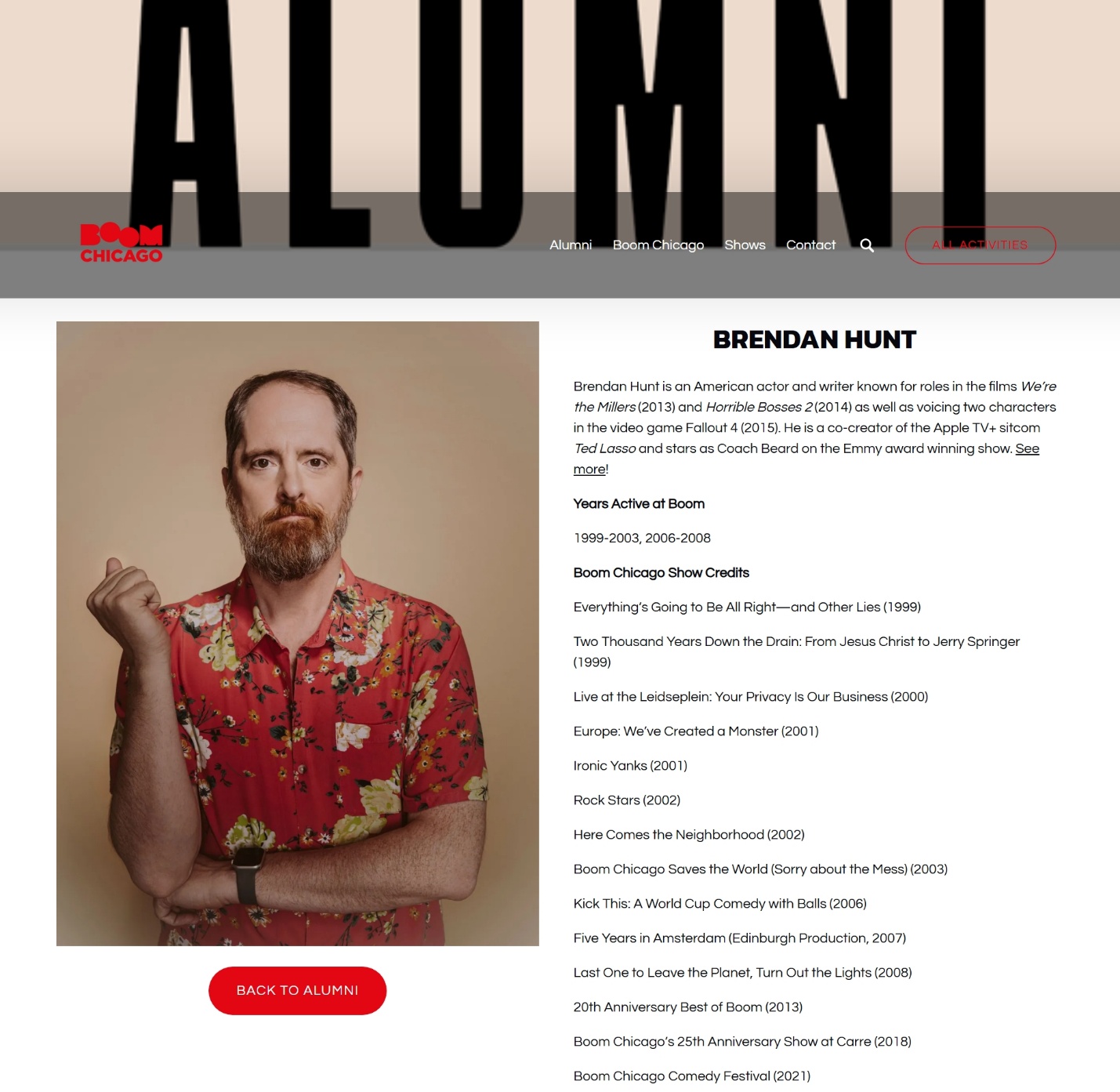

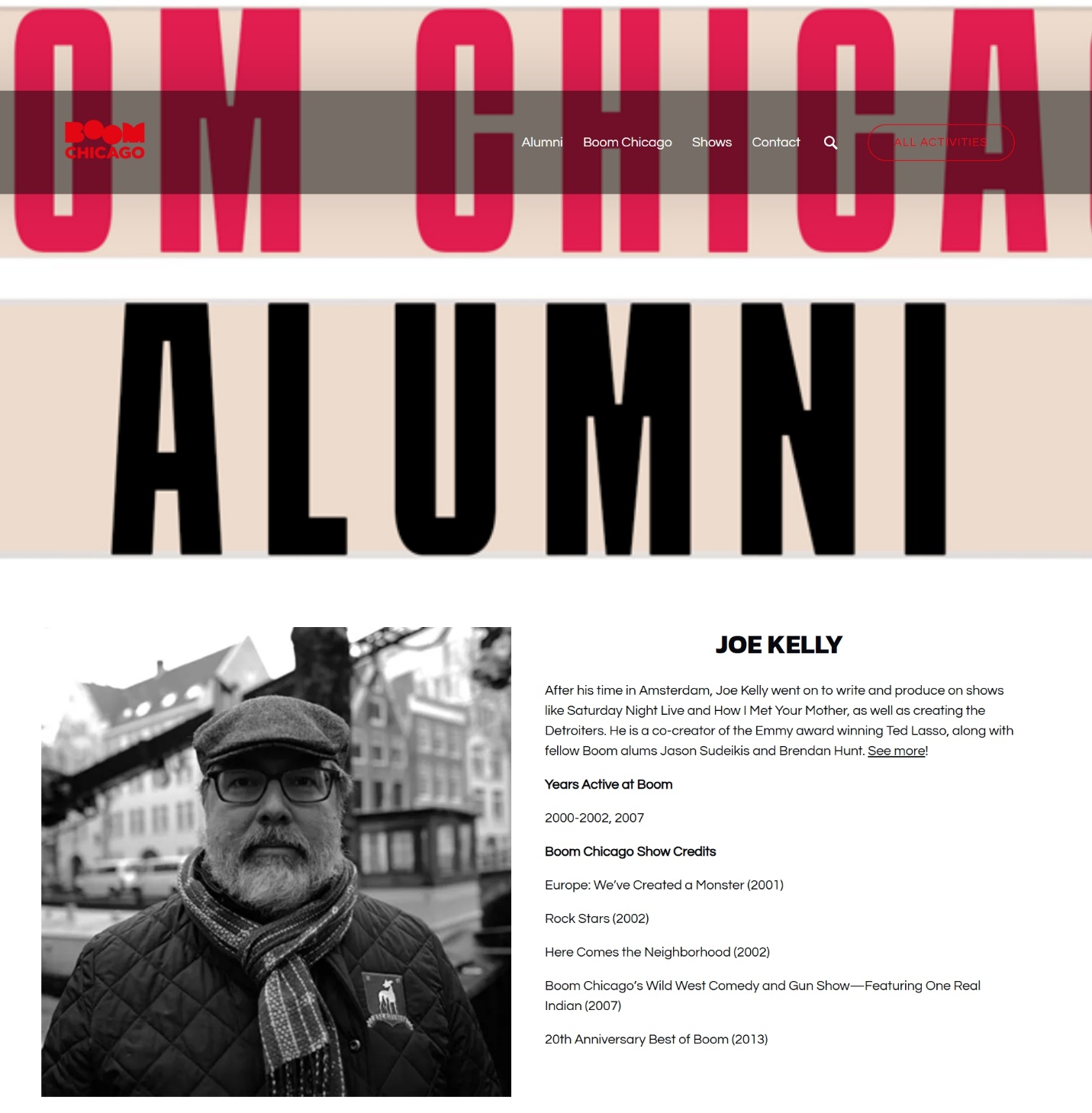
Forbes Article from 1999
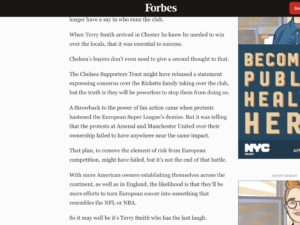
Forbes Article from 1999


